01142908809
Request a call back

Request a call back
Request a call back
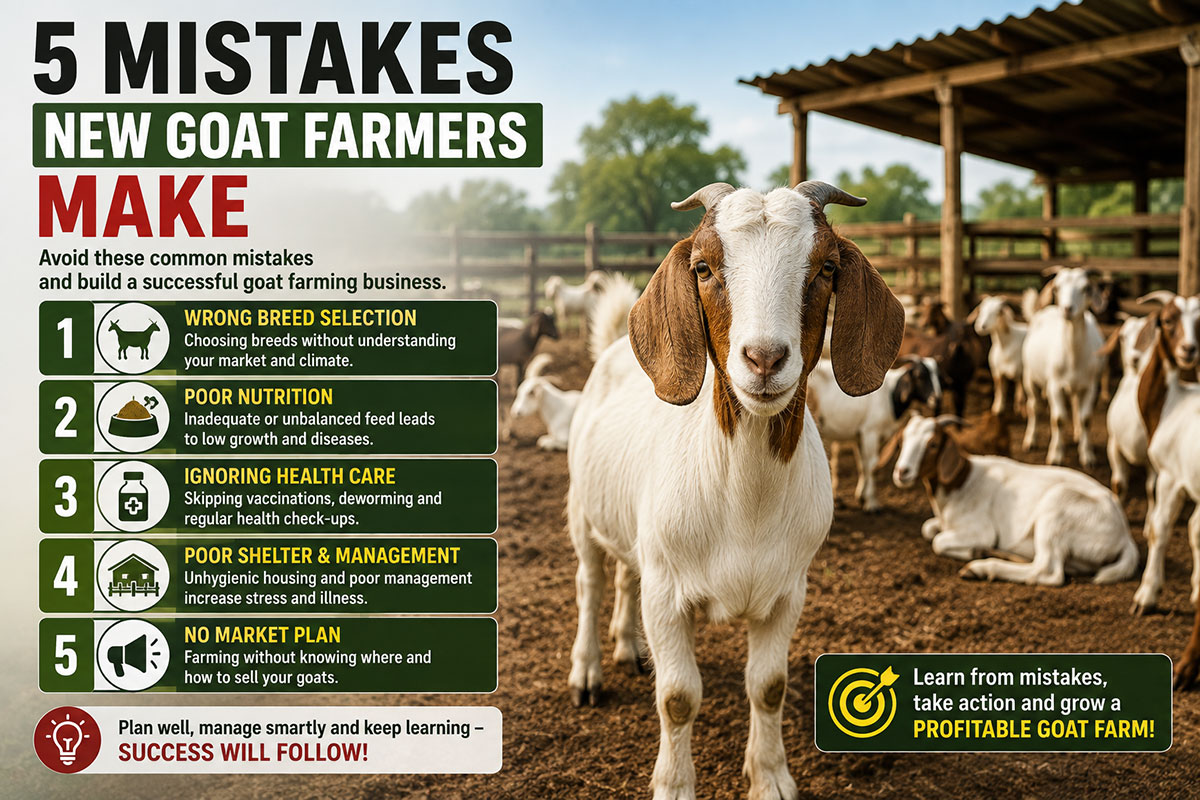
Goat farming looks simple from the outside — low investment, hardy animals, steady demand. But most new farms lose money in year one, and it’s rarely because goats are hard to raise. It’s because of a handful of avoidable planning mistakes. Here are the five that show up most often, and what to do instead.
A breed that thrives in Rajasthan’s dry heat may struggle in Kerala’s humidity. New farmers often pick a breed based on price or popularity rather than climate fit, and pay for it through poor growth rates and higher disease incidence. Before buying, research which breeds are already being raised successfully within roughly 100km of your farm — local success is the best evidence of climate suitability.
Many first-time farmers spend most of their capital on animals and treat the shed as an afterthought. But poor ventilation and drainage are behind a large share of preventable disease losses. A modest, well-drained, elevated-floor shed will outperform an expensive one with poor airflow. Budget shed construction as seriously as you budget livestock purchase.
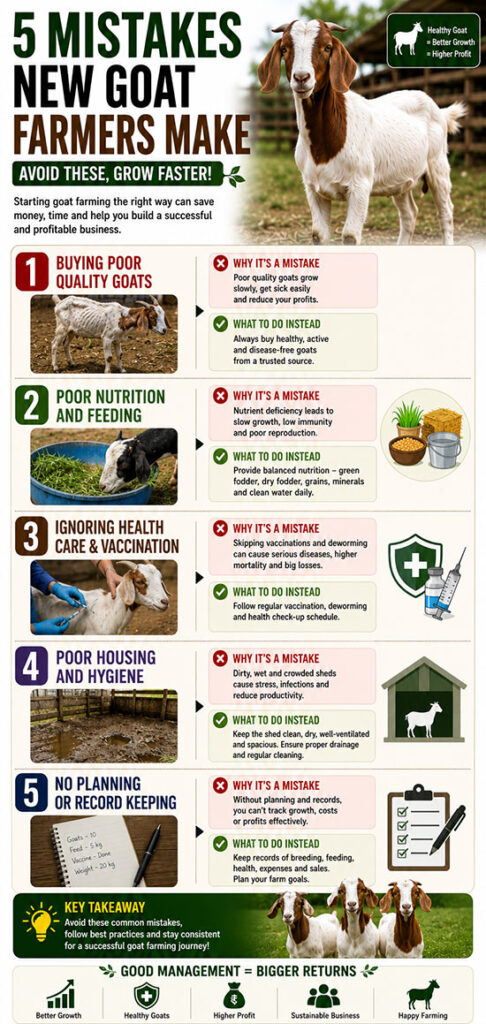
Cheaper goats at the mandi are sometimes cheap for a reason. New farmers, eager to stretch their budget, sometimes skip basic health checks — coat condition, gait, eyes, appetite — and bring home an animal that infects the rest of the herd or simply fails to thrive. A slightly higher purchase price for a visibly healthy animal is almost always the better trade.
Waiting until an animal is visibly sick to find a veterinarian costs precious hours. Identify and build a relationship with a local vet or animal husbandry officer before you need one — ideally during setup, not during an emergency.
It’s tempting to skip record-keeping when the herd is small. But farmers who track feed cost, medicine cost, and sale price per animal from the start are the ones who can tell, a year in, whether the business is actually profitable — and adjust early. Farmers who skip this often only discover a problem after a full breeding cycle has passed.