
Introduction
The tail end of the monsoon is one of the riskiest windows in the goat farming calendar. Waterlogged sheds, humid air, and muddy paddocks create ideal conditions for two of the most damaging goat diseases in India: Peste des Petits Ruminants (PPR) and foot rot. Both spread quickly through a herd if missed early, and both are largely preventable with basic vigilance. This guide walks through what to watch for and what to do the moment you spot trouble.
What PPR Looks Like Early
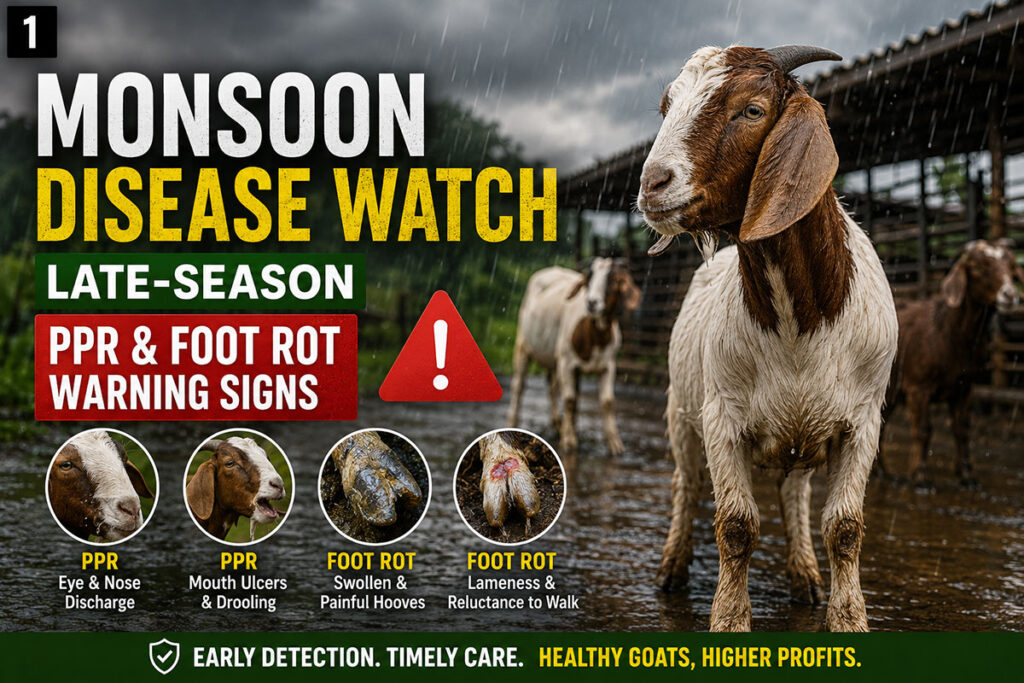
PPR often starts quietly — a goat goes off its feed, runs a mild fever, and seems slightly withdrawn. Within a day or two, watery discharge from the eyes and nose appears, followed by mouth sores that make eating painful. Diarrhoea and laboured breathing follow in more advanced cases. Because early symptoms mimic a common cold, many farmers lose a full day or two before acting — and PPR spreads fast in a shared shed. Any goat showing fever plus nasal discharge during monsoon should be isolated immediately, not just “watched.”
Foot Rot: The Silent Profit Drain
Foot rot doesn’t kill quickly, but it quietly destroys weight gain and breeding performance. Watch for goats favouring one leg, reluctant to stand, or with a foul smell and softened tissue between the hooves. Standing water and mud are the biggest triggers — even a well-built shed becomes risky if drainage channels clog during heavy rain. Trimming hooves before monsoon starts and keeping bedding dry are the two highest-leverage prevention steps available to any size of farm.
What To Do If You Spot Symptoms
- Isolate the affected animal the same day — don’t wait for a second case to confirm your suspicion.
- Call your local veterinary officer or animal husbandry helpline rather than guessing at treatment.
- Disinfect shared feeding and watering points, since both diseases spread through contact and shared water.
- Check vaccination records — PPR vaccination, when kept current, is the single most effective protection available.
- Keep sick-animal records; a pattern across multiple goats points to an environmental cause (drainage, ventilation) worth fixing at the shed level, not just the animal level.
Key Takeaways
- PPR spreads fast through shared sheds — isolate suspected cases same-day.
- Foot rot is driven by standing water and mud; drainage prevention beats treatment.
- Keep PPR vaccination current, especially heading into monsoon.
- A pattern of illness across several goats usually means a shed problem, not just bad luck.
Frequently Asked Questions
Can PPR spread to other livestock like sheep?
Yes — PPR affects both goats and sheep, so mixed herds need equal vigilance across species.
How quickly does foot rot resolve once the ground dries out?
Mild cases often improve within one to two weeks once feet stay dry and hooves are trimmed, but persistent lameness needs veterinary attention.