01142908809
Request a call back

Request a call back
Request a call back
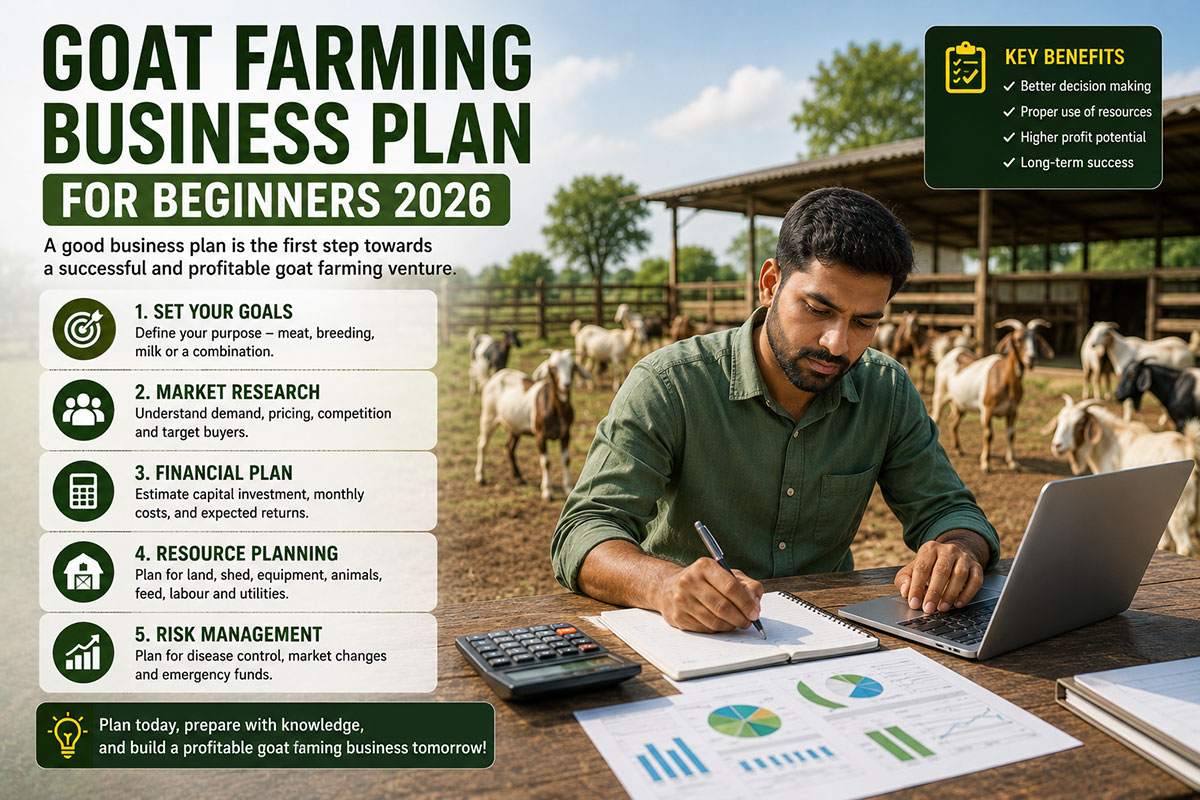
Starting a goat farm without a written plan is one of the fastest ways to run out of money before the business finds its footing. A good plan doesn’t need to be complicated — it needs to force honest answers to a handful of questions before you spend a rupee. This framework covers the core decisions every beginner should work through in 2026.
Most successful beginner farms start with 20–50 breeding does rather than jumping straight to 100+. A smaller start lets you learn shed management, feeding rhythms, and local market dynamics with lower downside if something goes wrong. Scale up only after one full breeding cycle proves the model works on your land.
Your breed choice, feeding programme, and buyer base all follow from this decision. Meat-focused farms (Boer, Sirohi, Osmanabadi, Black Bengal depending on region) sell primarily through mandis and butchers. Milk-focused farms (Jamunapari, Beetal) need a more consistent nearby buyer, often dairies or direct consumers. Deciding this first prevents a lot of wasted research later.
As a rough planning figure, allow around 10–15 sq. ft of covered shed space per adult goat, plus outdoor movement area. Water access matters more than most beginners expect — goats need clean water daily, and hauling it manually at scale becomes a real labour cost.
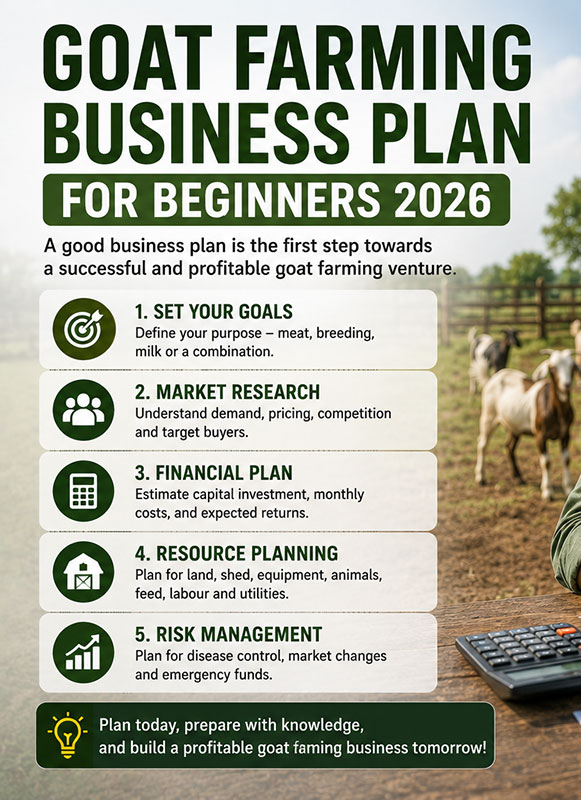
A small commercial unit (30–40 goats) is commonly set up with an investment in the range of ₹7–8 lakh, covering shed construction, initial livestock purchase, and first-year running costs. Monthly running costs for a mid-size unit — feed, labour, medicine — are often cited around ₹35,000–40,000. Build your own version of this budget rather than copying these figures directly, since land cost and labour rates vary sharply by state.
Explore National Livestock Mission (NLM) support, which can cover up to 50% of project cost for breeding units, and NABARD-linked subsidies (commonly 25% general category, 33.3% for SC/ST and women applicants). A MUDRA loan is another route worth comparing before committing to a bank’s standard agricultural loan terms.
Most farms take 18–24 months to reach consistent profitability, once you account for the breeding cycle, kid-rearing period, and the learning curve of the first year. Plan your cash flow assuming year one is about learning and stabilising, not maximising profit.