01142908809
Request a call back

Request a call back
Request a call back
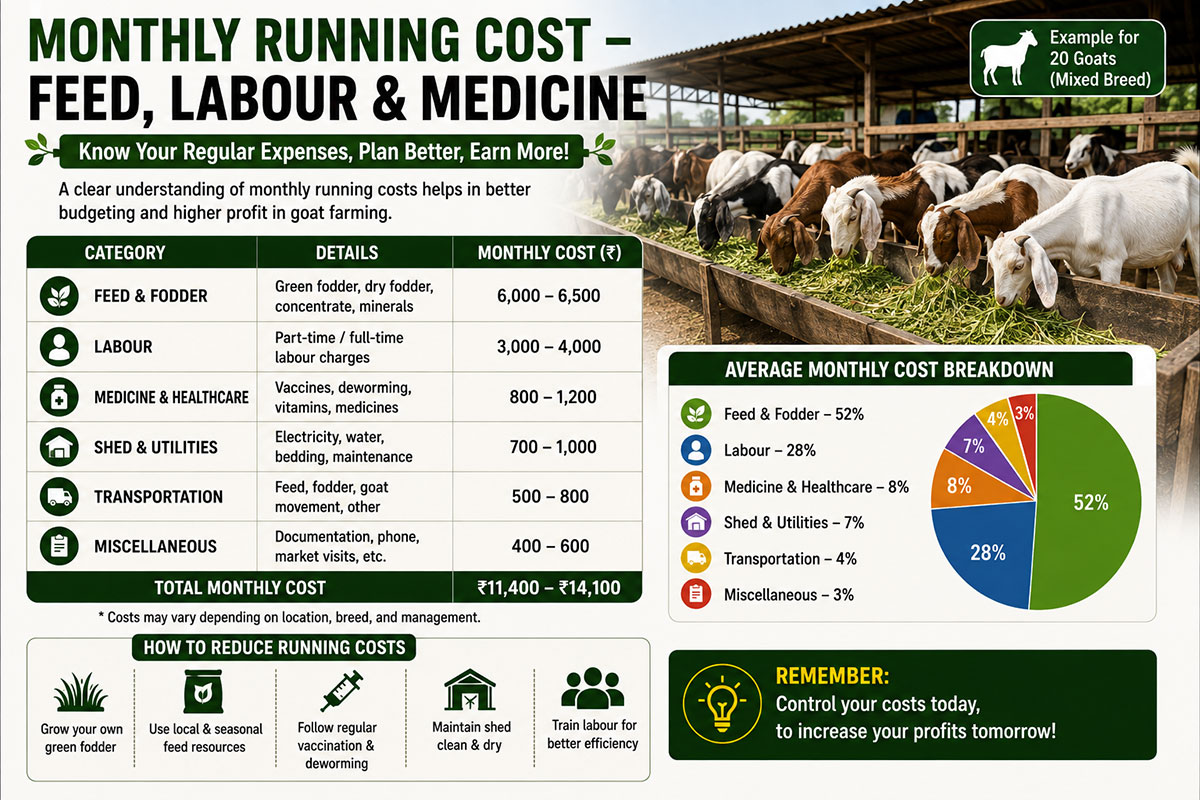
Setup cost gets most of the attention when people plan a goat farm, but it’s the monthly running cost that determines whether the business survives its first year. For a mid-size unit, running costs are commonly cited in the range of ₹35,000–40,000 per month — here’s roughly where that goes.
Feed — green fodder, dry fodder, and concentrate — usually makes up the biggest single share of monthly cost, often 45–55% of the total. This is also the cost most within a farmer’s control: growing your own fodder (Napier grass is a common choice) can meaningfully reduce this line item over time, in exchange for the labour and land needed to cultivate it.
For a mid-size unit, one or two dedicated workers are typically needed for feeding, shed cleaning, and general herd management. Labour cost varies sharply by state and whether it’s family labour or hired staff, but it’s usually the second-largest recurring line item after feed.
Vaccination, deworming, mineral supplements, and occasional vet visits form a smaller but non-negotiable share of monthly cost. Farmers who under-budget here often end up spending far more later treating preventable outbreaks — this is one area where cutting corners tends to backfire.
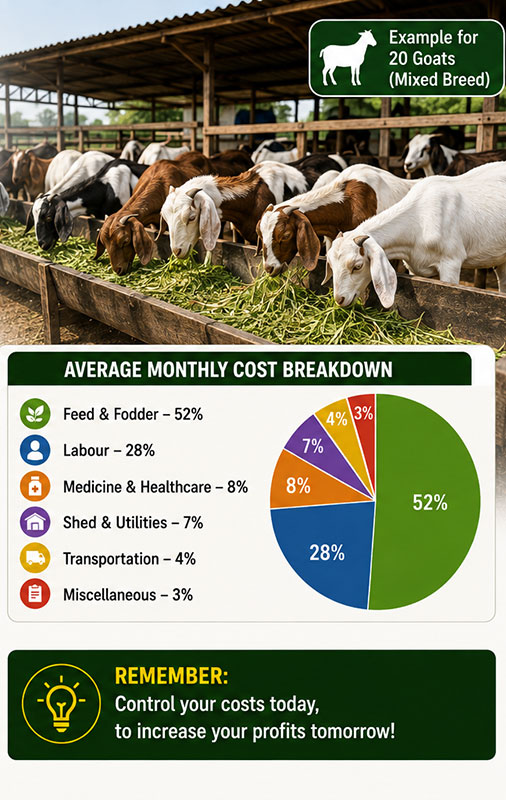
Often overlooked in initial budgeting, water supply (especially where it must be pumped or hauled) and basic electricity for lighting/water pumps add a smaller but steady monthly cost.
Shed maintenance, transport for sales or purchases, and a small buffer for unexpected costs round out a realistic monthly budget. Farms that skip this buffer are the ones most likely to be caught off guard by a bad month.
Rather than adopting the ₹35,000–40,000 figure directly, build your own monthly budget using your actual herd size, local labour rates, and whether you’re growing or buying fodder. Track actual spend against your estimate for the first three months — this is usually enough to reveal where your farm’s real cost structure differs from the generic benchmark.