01142908809
Request a call back

Request a call back
Request a call back
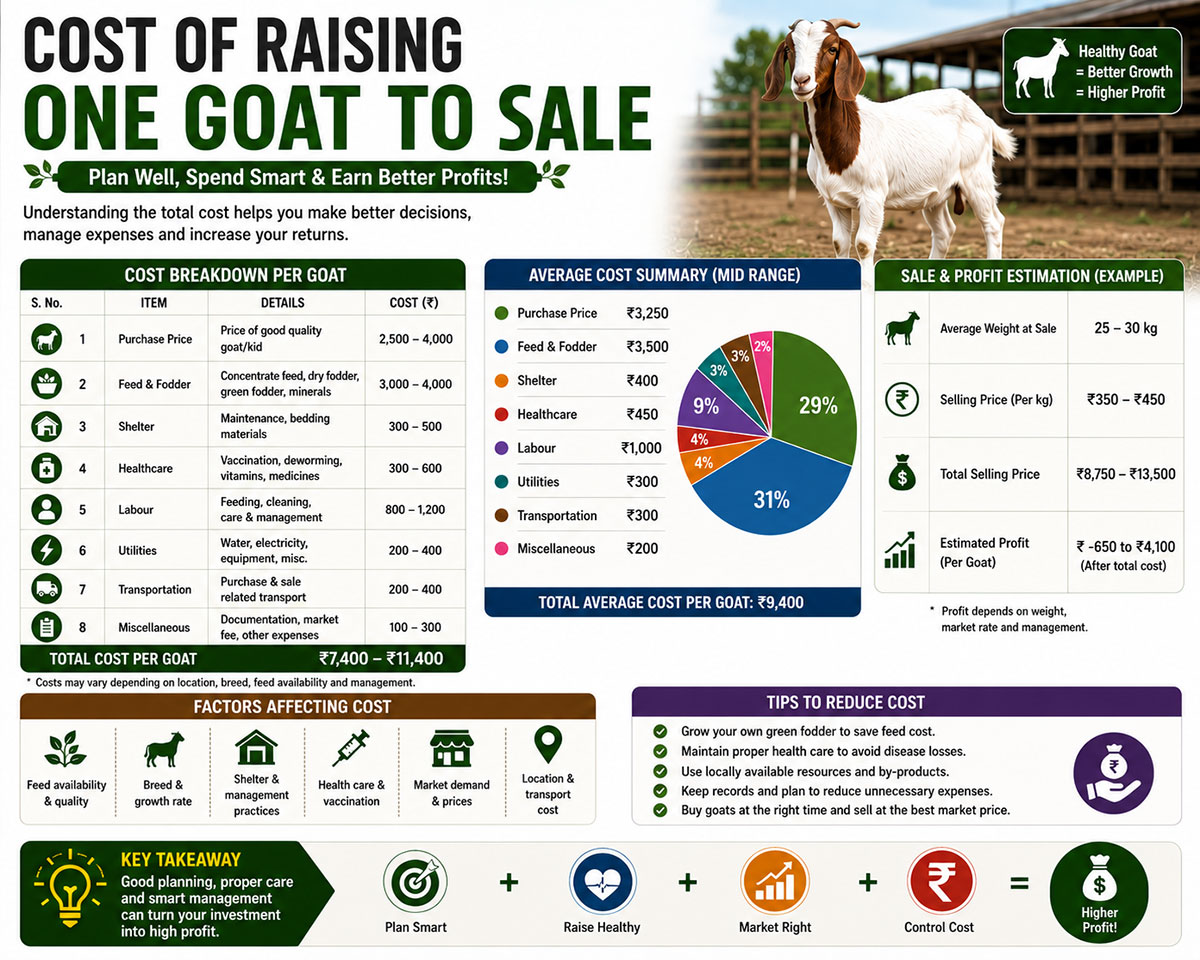
Most goat farming income claims are built around sale price alone. But understanding your real per-animal cost — from birth to sale — is what actually tells you whether the business is working. Here’s a practical breakdown of where the money goes for a single animal.
This is the largest component, covering milk/colostrum in early weeks, then a growing mix of green fodder, dry fodder, and concentrate as the kid matures toward sale weight (commonly 8–12 months depending on breed and target market). Feed cost per animal scales with growth rate — faster-growing breeds like Boer often eat more concentrate to hit that growth, raising feed cost even as they reach sale weight sooner.
Vaccination, deworming, and mineral supplementation are a smaller but essential per-animal cost. Skipping this to save money is one of the most common false economies in goat farming — a single preventable illness can cost far more in treatment and lost growth than the vaccination would have.
Even if labour and shed cost are paid once for the whole herd, it’s worth mentally allocating a share to each animal to understand true per-head profitability — otherwise it’s easy to overestimate margin by only counting feed.
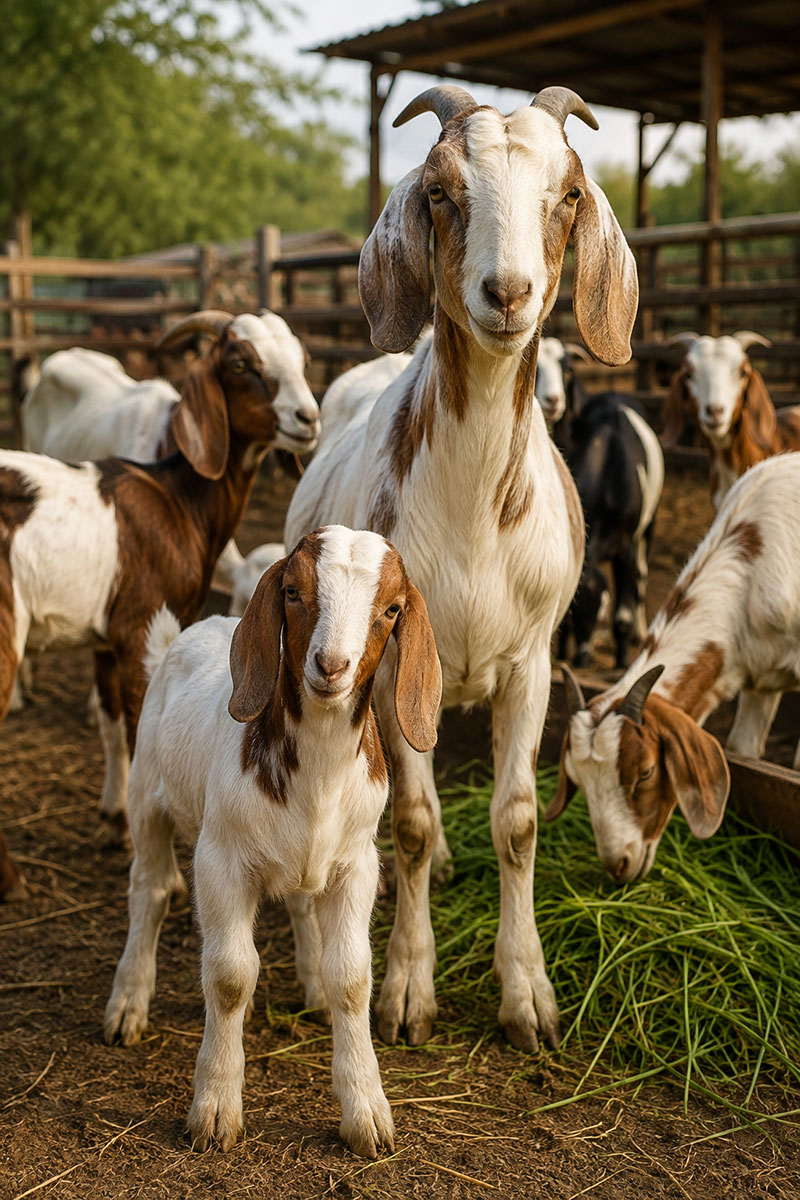
This is the step most farmers skip. If, say, 1 in 10 kids doesn’t survive to sale, the true cost per surviving, sellable animal is higher than the cost of any single animal in isolation — the herd’s total cost is being recovered from fewer final sales. Reducing kid mortality is therefore one of the highest-leverage ways to improve real per-animal economics, often more impactful than chasing a slightly higher sale price.
Capital tied up in a growing animal for 8–12 months has an opportunity cost, even if it’s rarely written down. Faster-growing breeds or better nutrition that shortens time-to-sale can meaningfully improve capital efficiency, separate from the raw margin per animal.
A useful exercise: track total farm cost (feed + medicine + allocated labour and shed) over a full breeding cycle, divide by the number of animals actually sold (not born), and compare that to average sale price. This mortality-adjusted, fully-loaded number is a far more honest profitability check than a simple feed-to-price comparison.