01142908809
Request a call back

Request a call back
Request a call back
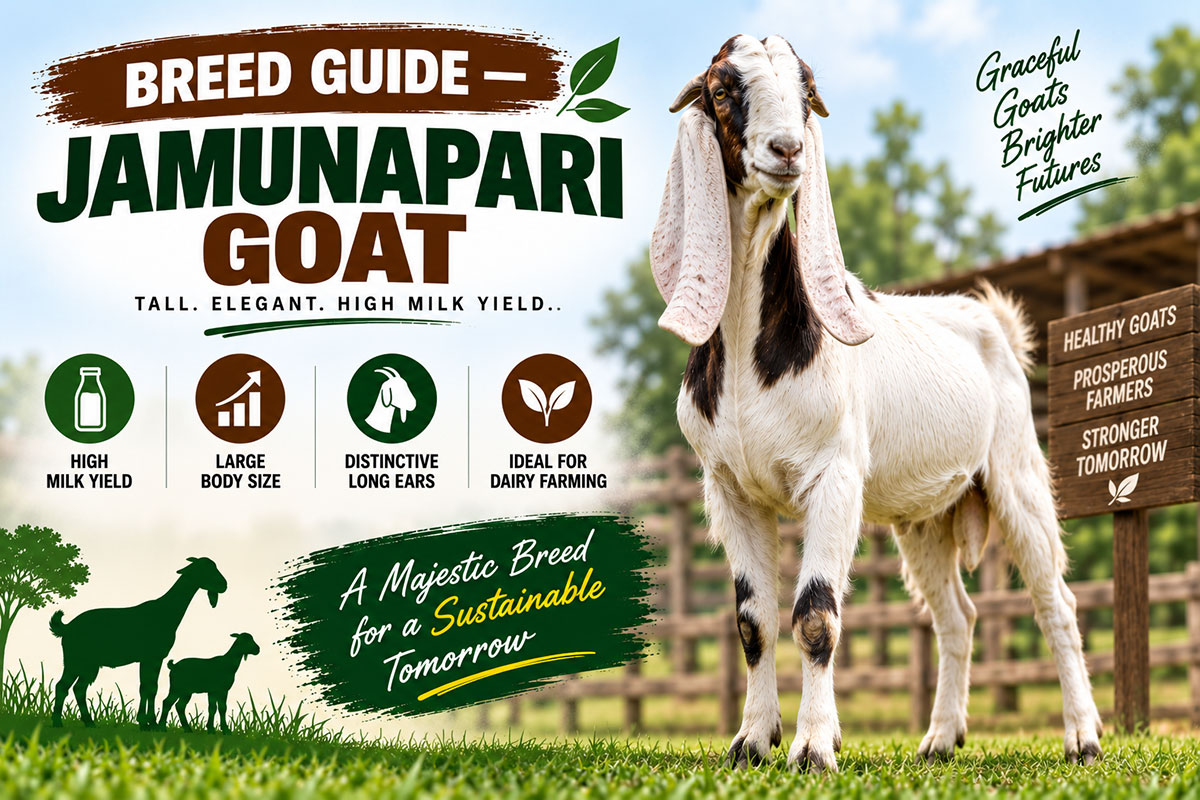
For farmers prioritising milk over meat, the Jamunapari is generally considered the standout Indian breed. Tall, distinctive, and known for the best milk yield among widely raised Indian goat breeds, Jamunapari has also been exported and used internationally to improve dairy-goat genetics elsewhere. Here’s what makes it a strong dual-purpose, milk-leaning choice.
Jamunapari originates from the Chakarnagar area along the Yamuna river in Uttar Pradesh, and is raised across UP and neighbouring states, as well as increasingly further afield by farmers specifically seeking milk performance.
Jamunapari goats are notably tall with a distinctive Roman nose, long pendulous ears, and a generally elegant, leggy build quite different from more compact meat-focused breeds.
Jamunapari does are commonly cited as producing in the range of 2–2.75 kg of milk per day during peak lactation under good management — a meaningfully higher figure than most other widely raised Indian breeds, which is the core reason dairy-focused farms gravitate toward this breed.
Jamunapari needs more consistent, higher-quality feeding to sustain its milk performance than hardier meat breeds require for basic maintenance — underfeeding a Jamunapari herd shows up quickly in reduced yield. It also benefits from good shed ventilation given its larger body size.
Jamunapari is the clear choice if milk sale or direct dairy supply is your primary goal, or if you’re specifically looking to improve milk genetics in an existing herd through crossbreeding. For pure meat-focused operations, other breeds may offer a better cost-to-growth ratio.