01142908809
Request a call back

Request a call back
Request a call back
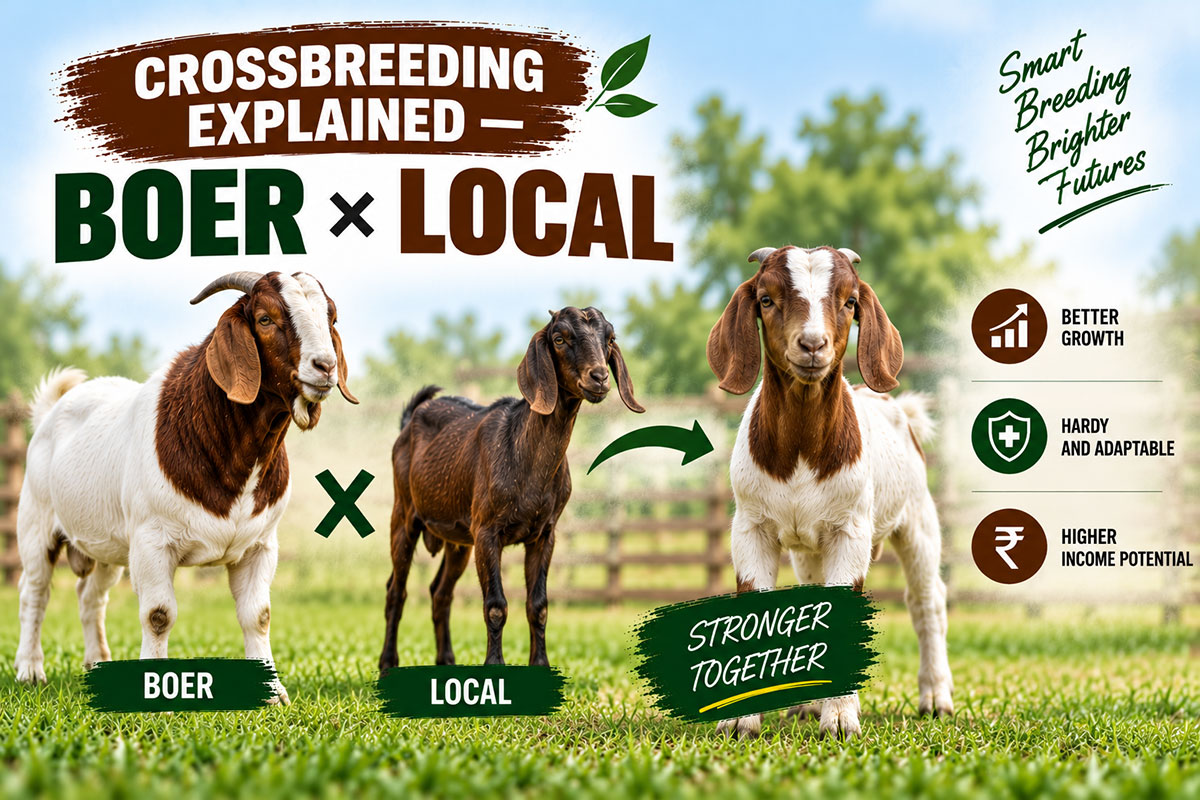
Crossbreeding — most commonly Boer bucks bred with local does — is one of the most widely used strategies among Indian commercial goat farmers looking to combine faster growth with regional hardiness. Here’s how it works and what it actually delivers.
Pure Boer offers excellent growth and meat yield but can need more intensive management in challenging climates. Pure local breeds (like Sirohi or Osmanabadi) offer strong hardiness but generally grow more slowly. Crossbreeding aims to capture a meaningful share of Boer’s growth advantage while retaining much of the local breed’s climate resilience and disease resistance — a practical middle path for many commercial operations.
Typically, a Boer buck is bred with local does, producing first-generation (F1) crossbred kids that show a blend of both parent breeds’ traits. Some farms continue crossbreeding across generations to fine-tune the balance between growth performance and hardiness, while others stabilise at F1 for a predictable, consistent result.
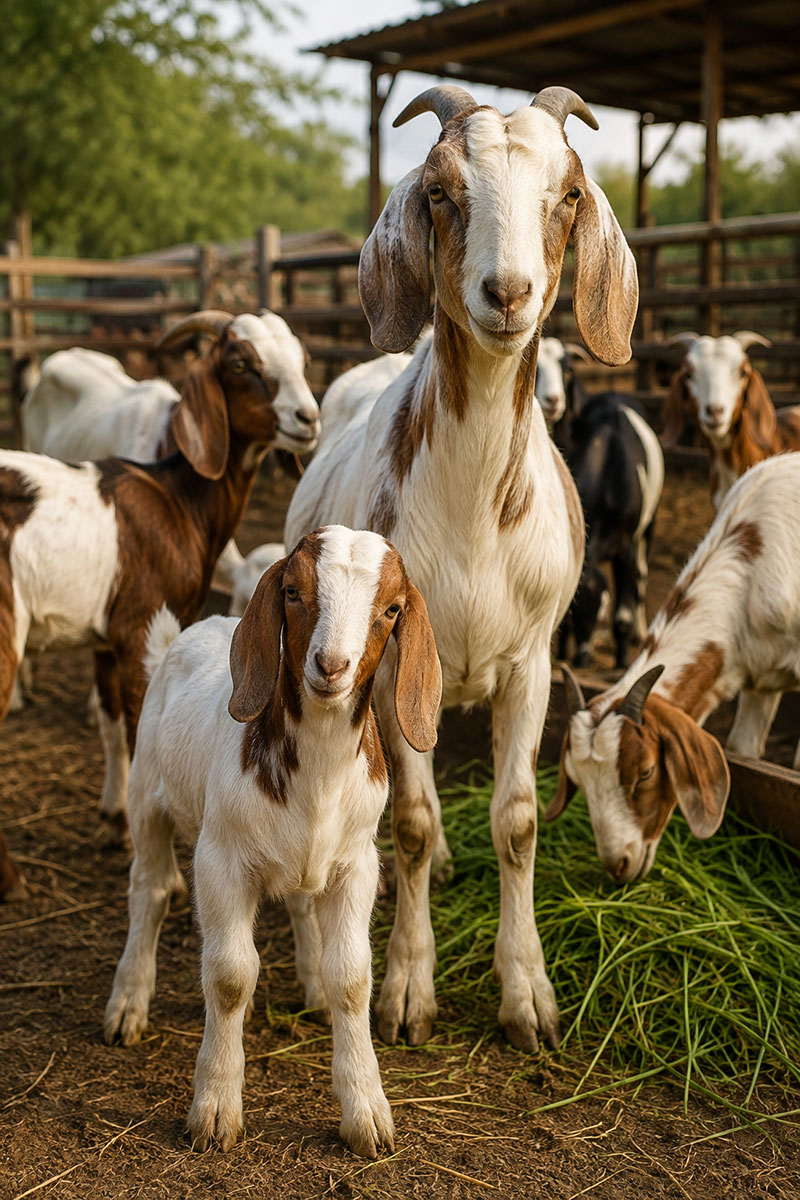
Boer crossbreeding is worth considering for farmers who already have an established local-breed herd and want to improve growth and market value without the higher cost and management intensity of switching entirely to pure Boer.