01142908809
Request a call back

Request a call back
Request a call back
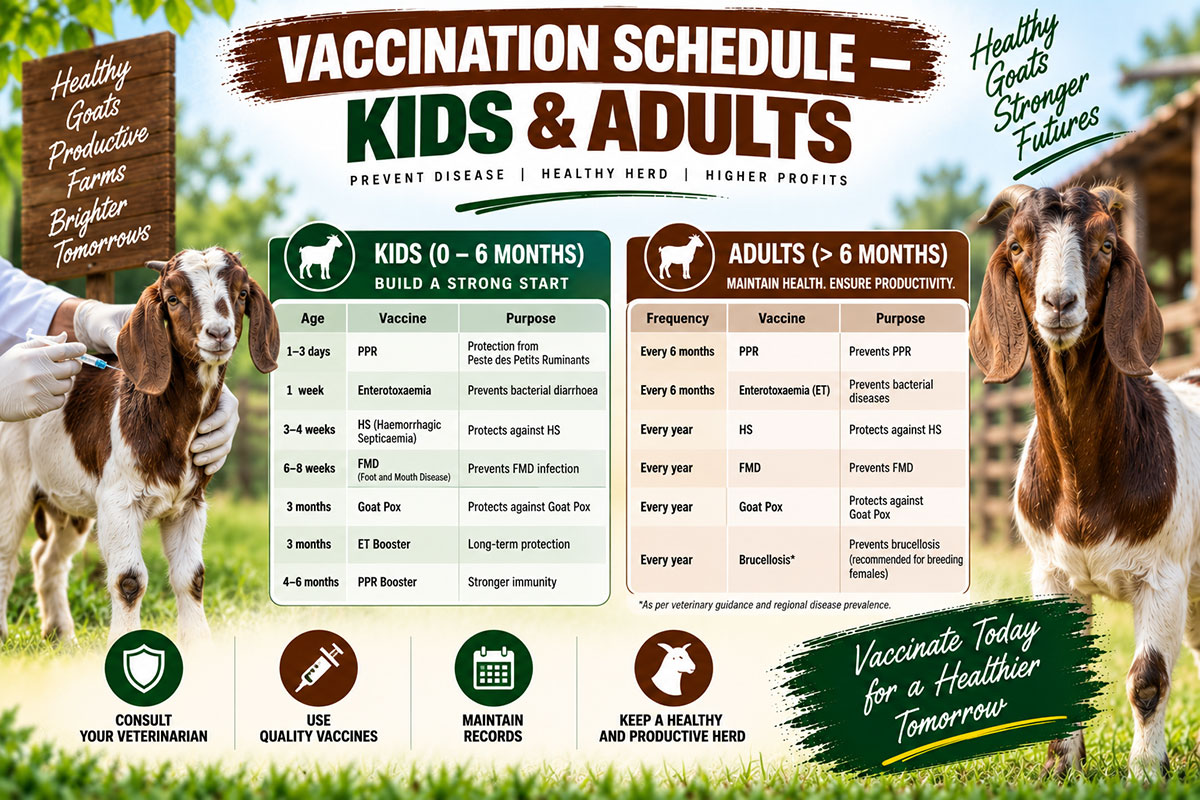
Vaccination is one of the highest-leverage, lowest-cost investments any goat farm can make — a fraction of the cost of treating an outbreak, let alone the losses from mortality. Here’s a practical overview of what a sound vaccination schedule typically covers.
Vaccinating too early, while maternal antibodies from colostrum are still protecting a kid, can reduce vaccine effectiveness; vaccinating too late leaves a window of vulnerability. This is why following an established schedule — rather than vaccinating on convenience alone — genuinely matters.
Young kids typically need protection against PPR (Peste des Petits Ruminants) and Enterotoxaemia among the priority vaccinations, generally beginning at a few months of age once maternal antibody protection has declined, with your local veterinary officer best placed to confirm exact timing for your region and any local disease pressure.
Adult goats typically need periodic booster vaccinations against PPR, Enterotoxaemia, and, depending on regional disease prevalence, additional vaccines such as Foot-and-Mouth Disease (FMD) or Haemorrhagic Septicaemia (HS) as advised locally.
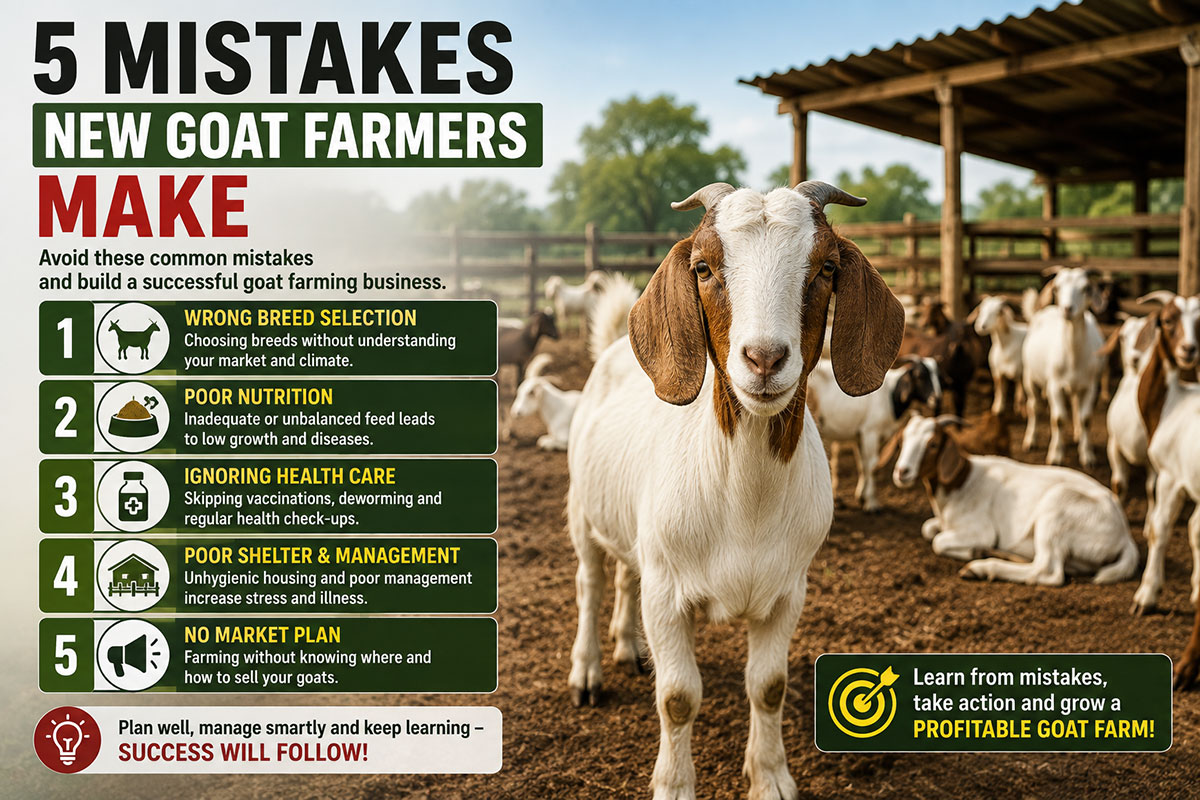
Exact vaccine types, dosing, and timing should be confirmed with your local veterinary officer or animal husbandry department, since disease prevalence and recommended protocols vary by region and can be updated over time. Building this relationship before you need emergency care pays off well beyond vaccination alone.