A92 C/2, Nambardar Estate, New Friends Colony, New Delhi,110025
01142908809
Request a call back
Write us info@goatgyan.com
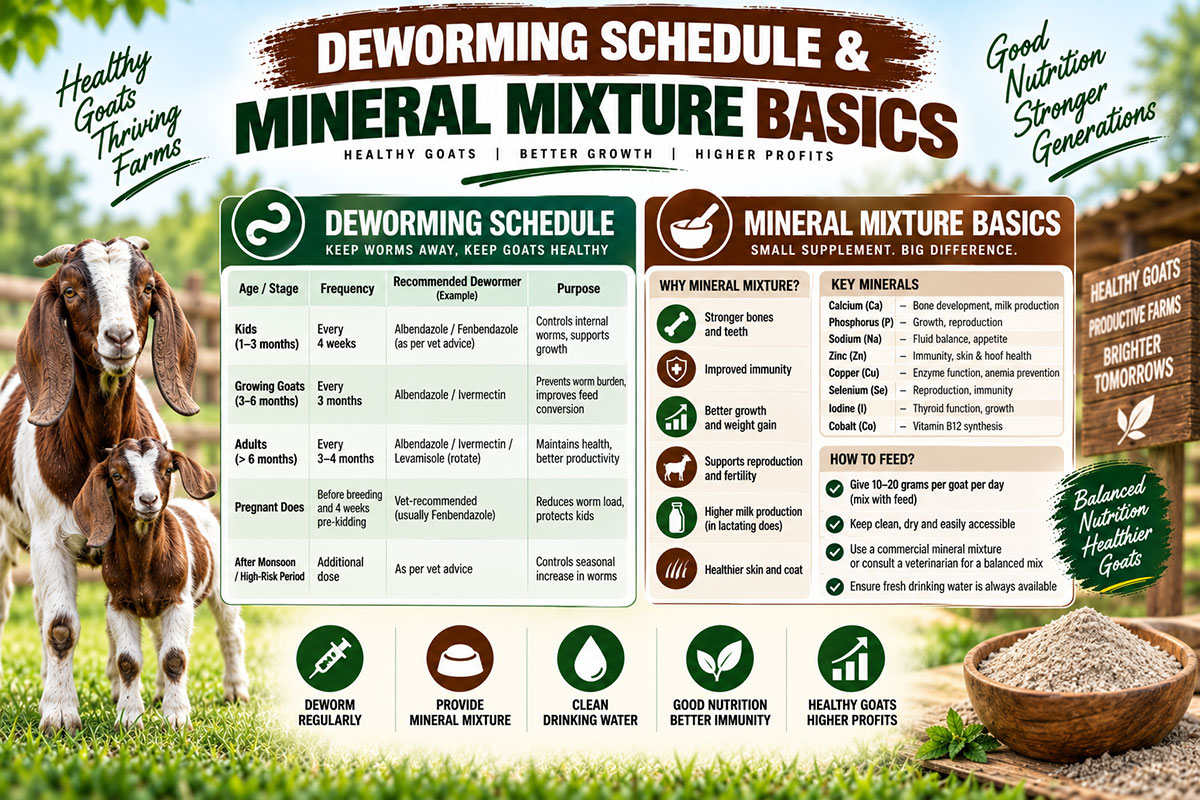
Deworming Schedule & Mineral Mixture Basics for Goats
Introduction
Internal parasites and mineral deficiencies are two of the quieter profit drains in goat farming — rarely dramatic, but steadily reducing growth rate, fertility, and overall herd health if left unmanaged. Here’s a practical overview of both.
Why Deworming Matters
Goats are highly susceptible to internal parasites, particularly under grazing or semi-intensive systems where exposure to contaminated pasture is higher. Left unmanaged, worm burden reduces feed conversion efficiency — meaning goats eat the same amount but gain less weight — well before visible symptoms like weight loss or poor coat condition appear.
Building a Deworming Schedule
A general approach many farms follow is deworming on a periodic schedule (commonly every 2–3 months, though this varies by region, season, and grazing system), with more frequent attention during monsoon when parasite pressure typically rises. Kids often need a more careful, veterinarian-guided schedule than adults, given their developing immune systems.
Signs Your Deworming Schedule May Need Adjustment
Reduced growth rate despite adequate feed
Rough or dull coat condition
Loose stool
Anaemia (pale gums) in more advanced cases
Mineral Mixture: Why It’s Not Optional
Standard fodder, especially in intensive or semi-intensive systems, often doesn’t provide the full range of minerals goats need for growth, fertility, and immune function. Mineral mixture supplementation — typically mixed into feed — addresses this gap, and its cost is small relative to the growth and fertility benefits it supports.
Signs of Mineral Deficiency
Reduced fertility or kidding rate
Slower growth despite adequate feed volume
Bone or joint issues in more severe, prolonged deficiency
Practical Tips
Don’t guess on deworming frequency — confirm an appropriate schedule with your local veterinary officer based on regional parasite pressure
Buy mineral mixture from a reliable source, since quality varies significantly between suppliers
Track deworming dates per animal or per batch, the same way you track vaccination
Key Takeaways
Internal parasites quietly reduce feed efficiency well before visible symptoms appear
A periodic deworming schedule (commonly every 2–3 months, vet-confirmed) protects growth and health
Mineral mixture supplementation fills gaps that standard fodder often can’t cover alone
Track both deworming and mineral supplementation the same way you track vaccination
+911142908809 | 9911013303
goatgyan@gmail.com
A92 C/2, 4th Floor, Nambardar Estate, Taimoor Nagar, New Friends Colony, New Delhi, Delhi 110025