01142908809
Request a call back

Request a call back
Request a call back
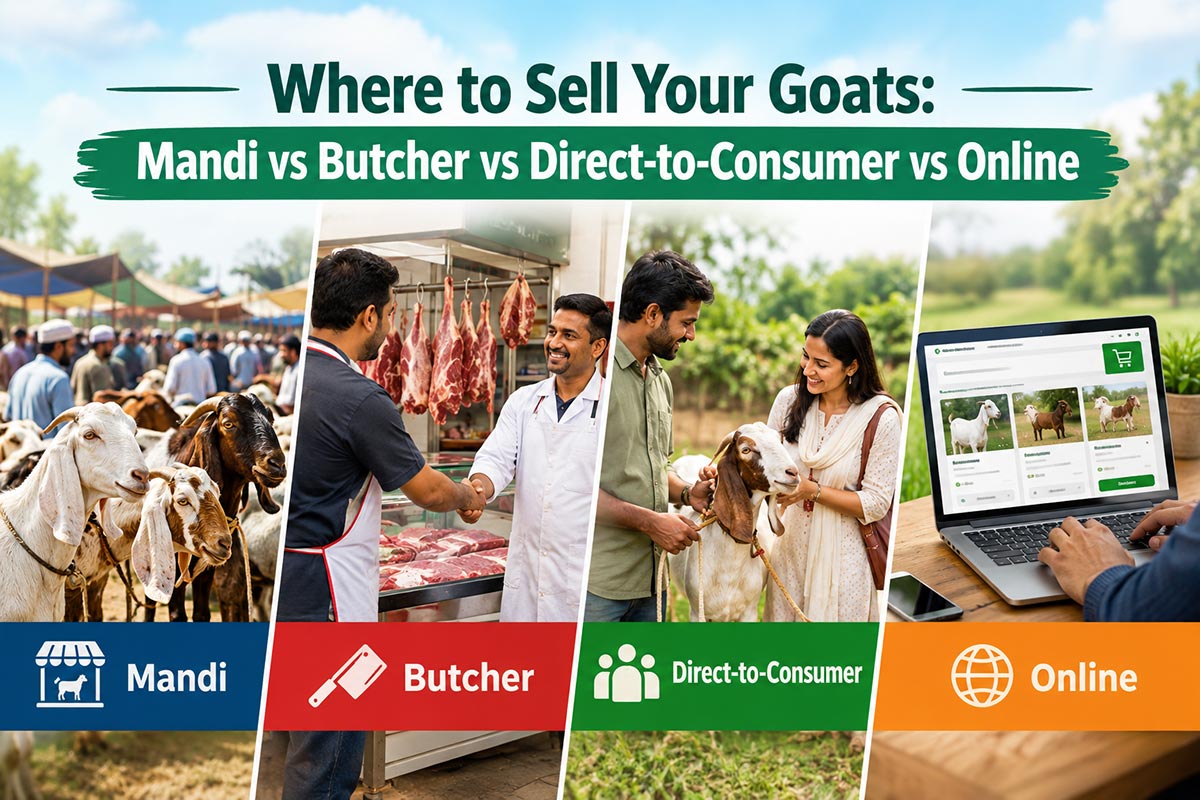
Where you sell can matter as much as how well you raise your goats. Each of the four common sales channels — mandi, direct-to-butcher, direct-to-consumer, and online marketplaces — comes with different price potential, effort, and reliability. Here’s how they compare.
The traditional route, and still the most common for most farmers. Advantages include a ready, established buyer pool and fast, cash-based transactions. The trade-off is exposure to day-to-day price fluctuation and, in many cases, a middleman’s margin between what the buyer ultimately pays and what the farmer receives.
Building a direct relationship with local butchers can improve price consistency compared to relying solely on mandi-day pricing, and reduces dependence on any single sales event. This route takes time to build — establishing trust and a reliable supply relationship doesn’t happen overnight — but can pay off with more predictable income once established.
Particularly viable for smaller farms or those near urban/peri-urban areas, direct-to-consumer sale (often for festival occasions) can command a premium over mandi or trader prices, since the farmer captures the margin that would otherwise go to intermediaries. This requires more marketing effort — word of mouth, local advertising, or social media — and doesn’t scale as easily to large volumes.
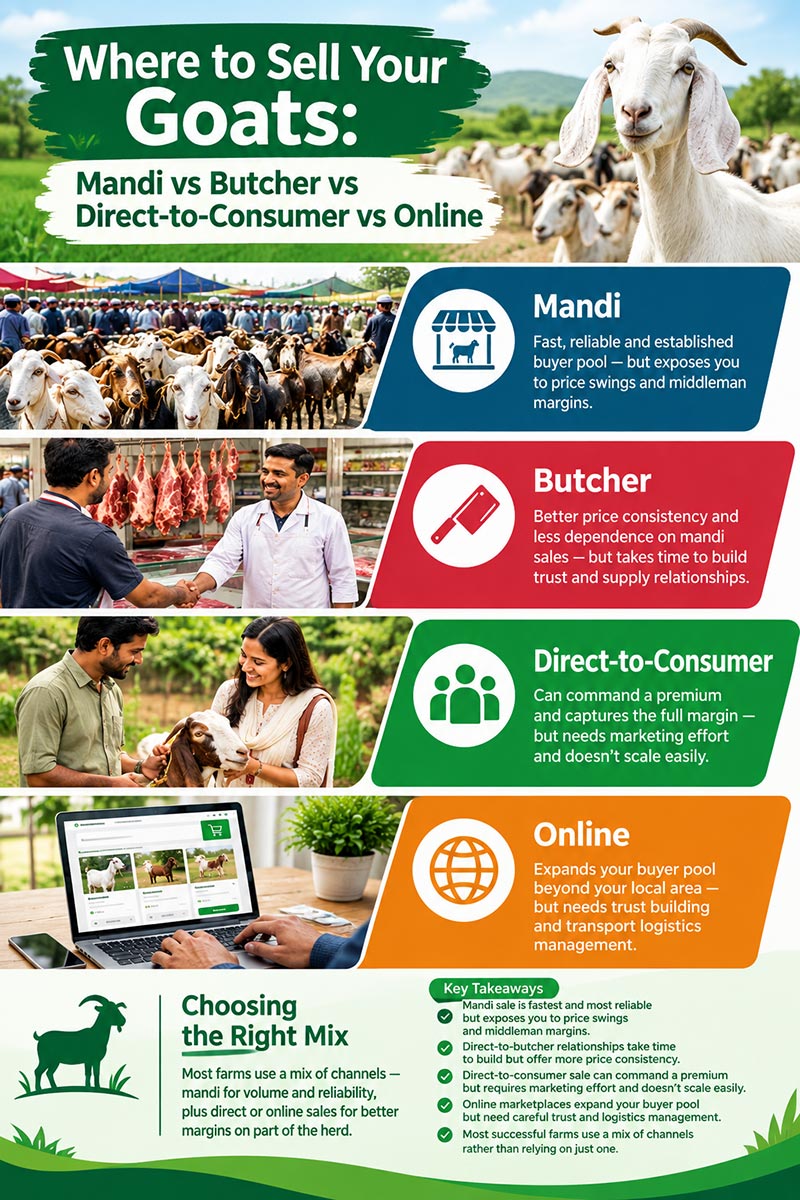
A growing channel, particularly for connecting directly with urban buyers or during high-demand periods like Bakra Eid. Digital livestock marketplaces can expand your buyer pool beyond your immediate local area, though building trust with unfamiliar buyers and managing transport logistics are real considerations.
Most established farms don’t rely on a single channel — a mix of mandi sales for volume and reliability, combined with some direct or online sales for better margins on a portion of the herd, is a common and practical approach. The right balance depends on your scale, location, and how much time you can invest in building buyer relationships beyond the mandi.