01142908809
Request a call back

Request a call back
Request a call back
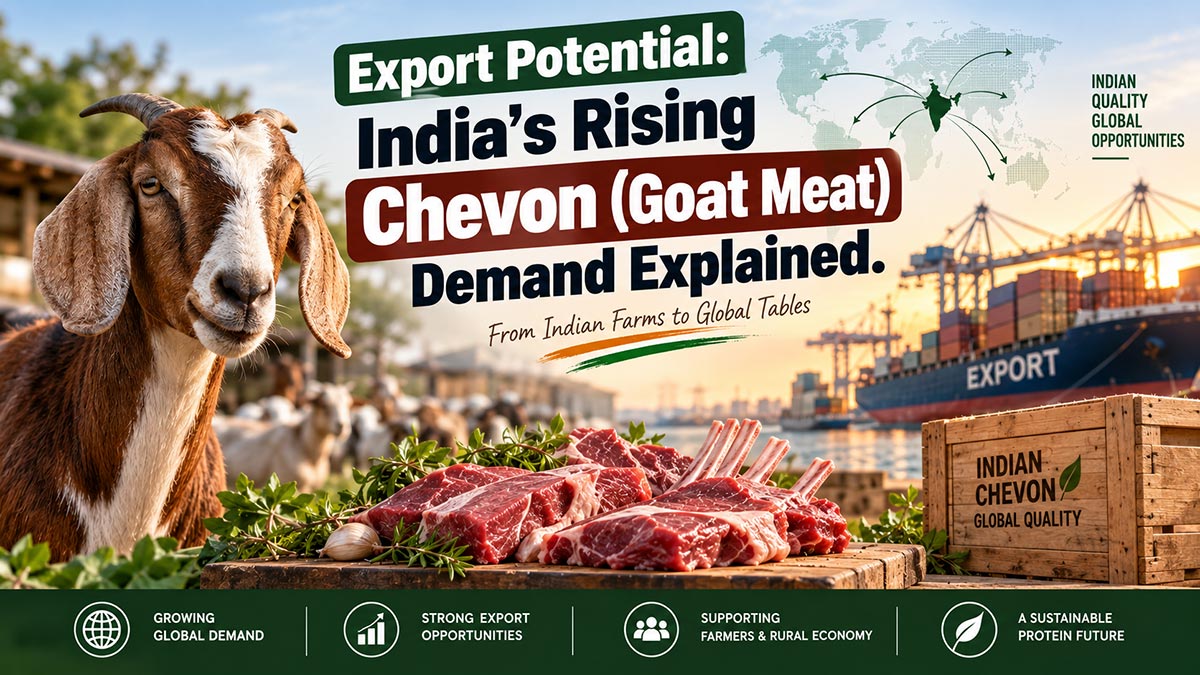
While most Indian goat meat (chevon) is consumed domestically, growing interest in export markets — alongside steadily rising domestic demand — is shaping how larger, more organised goat farming operations are planning for the years ahead. Here’s a practical look at what this trend means.
India’s chevon consumption continues to grow alongside population growth, rising incomes, and cultural preference for goat meat across many regions and communities. This steady domestic demand growth — commonly discussed in the range of high single-digit annual growth — remains the primary driver of the sector, and for most farmers, the domestic market will remain the main opportunity for the foreseeable future.
India has been developing export capacity for chevon to markets in the Middle East and elsewhere, where demand for halal-certified goat meat is significant. Export-oriented production generally requires meeting specific quality, processing, and certification standards well beyond what domestic mandi sale requires — this is a meaningfully higher bar, relevant mainly to larger, more organised operations rather than typical small farms.
Rather than chasing export opportunities directly, most small and mid-size farmers benefit more from focusing on domestic market fundamentals — breed selection, cost control, mandi relationships — while staying aware that overall sector demand growth supports a generally positive long-term outlook for the industry.