01142908809

Request a call back

Write us
goatgyan@gmail.com

A92 C/2, Nambardar Estate,
New Friends Colony, New Delhi,110025

01142908809

Request a call back

Write us
info@goatgyan.com

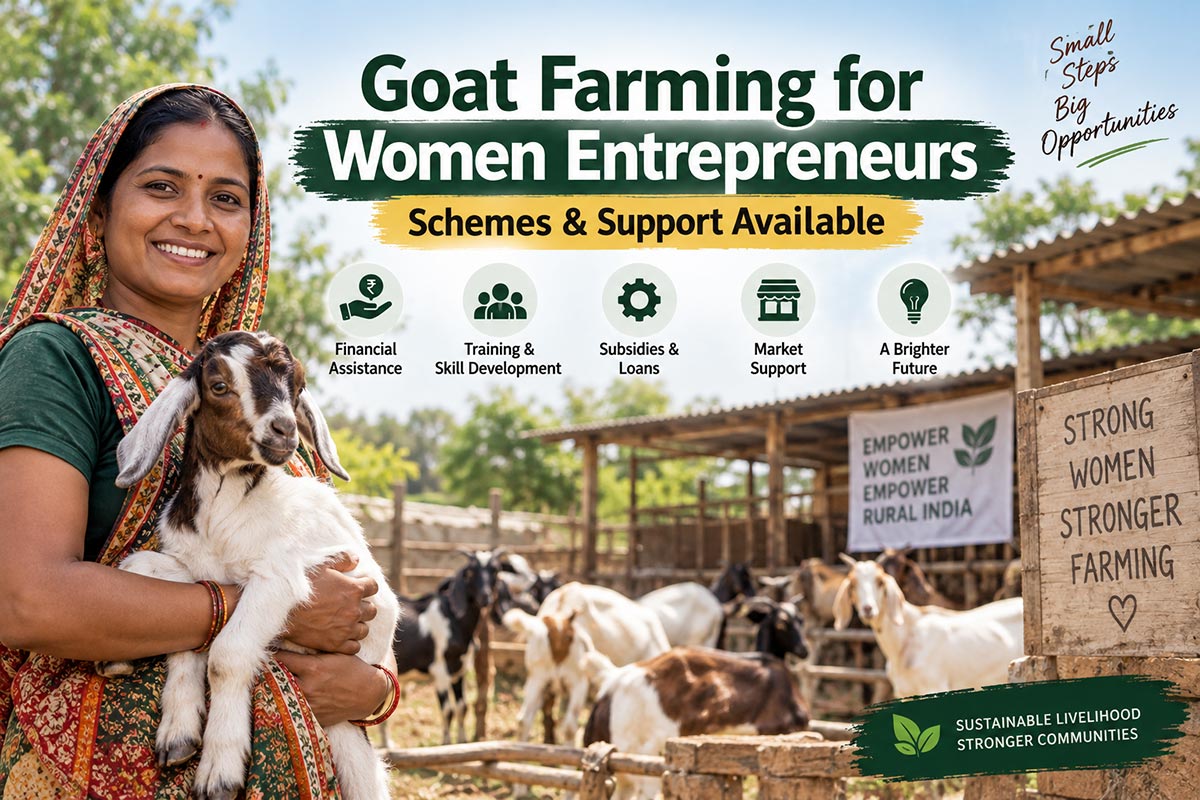
Goat Farming for Women Entrepreneurs: Schemes & Support Available

Introduction

Goat farming has become an increasingly popular entrepreneurship path for women across rural and semi-urban India, supported in part by dedicated scheme benefits designed to lower the barrier to entry. Here’s an overview of what’s available and how to access it.

Higher Subsidy Rates Under NABARD-Linked Schemes

Women applicants (along with SC/ST applicants) are commonly eligible for a higher subsidy rate — often cited around 33.3%, compared to roughly 25% for general category applicants — under NABARD-linked goat farming loan schemes. This meaningfully reduces the effective capital needed to start.

Self-Help Group (SHG) Pathways

Many women enter goat farming through Self-Help Groups, which can provide not just access to group lending but also shared knowledge, collective bargaining power when purchasing feed or selling animals, and eligibility for certain scheme benefits specifically structured around group applications.

State-Level Women-Focused Schemes

Several states run their own livestock development schemes with specific provisions or priority access for women entrepreneurs, alongside central schemes like NLM. It’s worth checking with your state’s Animal Husbandry Department or Rural Livelihood Mission for state-specific benefits, since these vary and change between funding cycles.
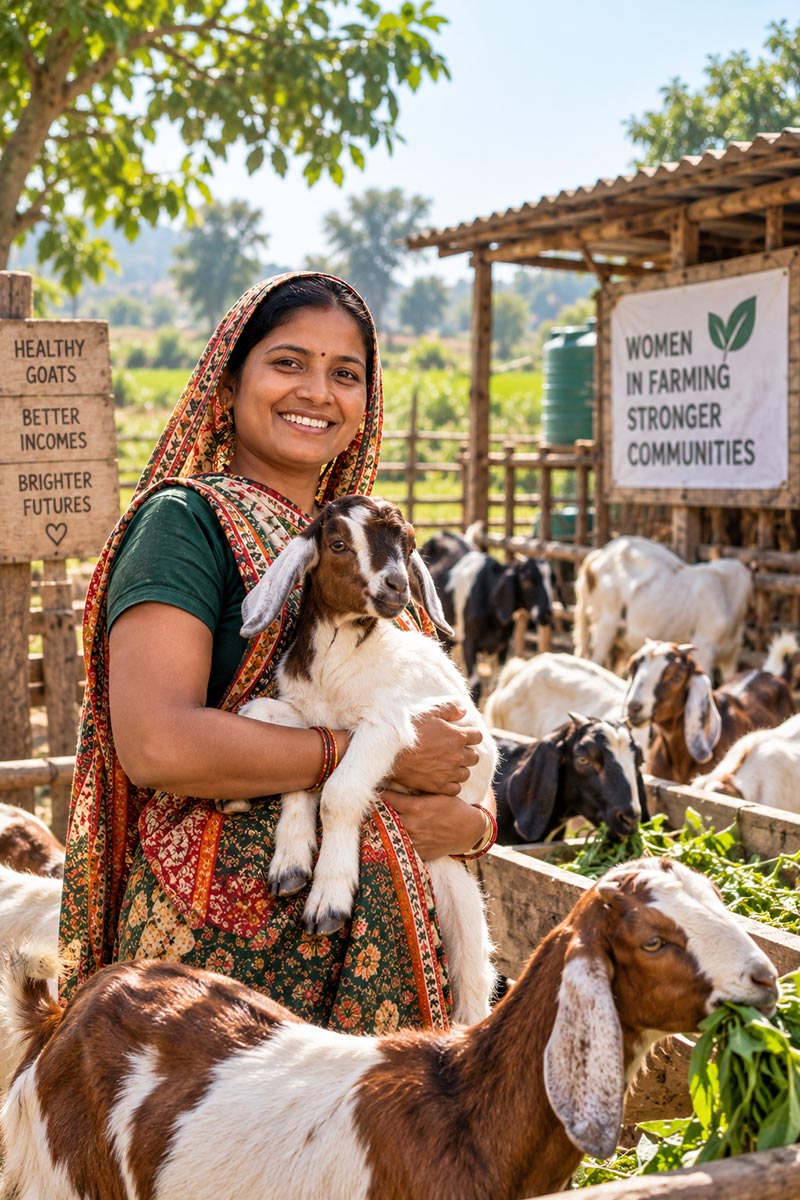
Practical Advantages Beyond Subsidy
  • Lower land requirement to start compared to many other agricultural enterprises, making it accessible even with limited landholding.
  • Flexible time structure — goat farming can often be managed alongside household responsibilities more readily than some other full-time enterprises.
  • Growing peer network — increasing numbers of women-led goat farming success stories provide both inspiration and practical local knowledge-sharing opportunities.
Getting Started: Practical Steps
  1. Connect with your local SHG network or Rural Livelihood Mission office to understand available group-based support.
  2. Research both central (NLM, NABARD-linked) and state-specific scheme benefits before finalising your financing plan.
  3. Prepare a realistic project report — the same appraisal standards apply regardless of applicant gender, so a strong DPR remains essential.
  4. Consider starting with a manageable herd size to build experience and a track record before scaling with additional financing.
Key Takeaways
  • Women applicants are commonly eligible for higher subsidy rates (often ~33.3%) under NABARD-linked schemes.
  • SHG-based entry offers both financial and knowledge-sharing advantages.
  • Check state-specific schemes alongside central schemes, since benefits vary by state.
  • A strong, realistic project report remains essential regardless of which scheme you access.

+911142908809 | 9911013303

goatgyan@gmail.com

A92 C/2, 4th Floor, Nambardar Estate, Taimoor Nagar, New Friends Colony, New Delhi, Delhi 110025