
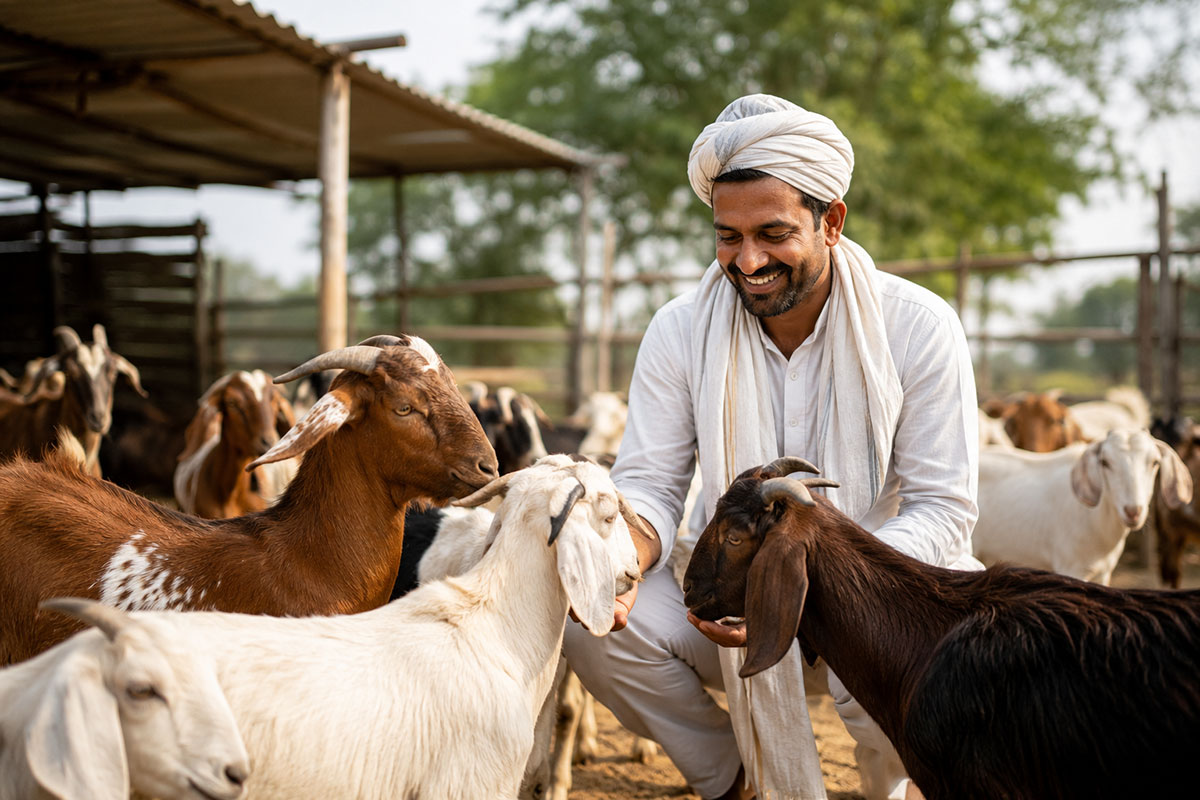
Goat farming looks deceptively simple from the outside: low land requirement, fast breeding cycle, strong market demand. That simplicity is exactly why so many first-time farmers under-plan — and why a significant share of new operations struggle badly within the first twelve months. Here’s an honest look at the patterns we see repeatedly.
Mistake 1: Buying Goats Before Building the System
The most common sequence we see is: buy goats first, figure out housing, feeding, and health management after. It should run in the opposite order. Shelter, fencing, a feeding plan, and a relationship with a vet or consultant should all be in place before the first animal arrives.
Mistake 2: Choosing the Wrong Breed for the Wrong Reason
New farmers frequently pick a breed because it’s fashionable or because a neighbour has it — not because it suits their local climate, fodder availability, and target market. A breed mismatch shows up as poor growth rates and higher disease susceptibility within the first few months.
Mistake 3: Underestimating Recurring Costs
The purchase price of goats is the smallest part of the real cost. Feed, veterinary care, and labour over 12 months routinely exceed what new farmers budget for, because most cost estimates online focus only on the upfront capital.
Mistake 4: No Disease Prevention Routine
Farms that skip a structured vaccination and deworming calendar (see our Health Calendar) don’t usually fail from one dramatic outbreak — they fail from a slow accumulation of preventable losses that erode margins month after month.
Mistake 5: No Market Plan Before Kidding
Many new farmers plan production in detail but never lock down who they’ll actually sell to, at what price, and when. By the time animals are market-ready, they’re negotiating from a weak position with whichever buyer shows up first.
What Successful First-Year Farmers Do Differently
They build the system before the herd, they get a written feasibility check before committing capital, and they stay connected to expert advice through the first full production cycle rather than only when something goes wrong. That ongoing connection — not a one-time purchase — is what actually prevents Year One failure.