01142908809

Request a call back

Write us
goatgyan@gmail.com

A92 C/2, Nambardar Estate,
New Friends Colony, New Delhi,110025

01142908809

Request a call back

Write us
info@goatgyan.com

Crossbreeding Explained: Boer x Local Breed for Faster Growth and Hardiness

Introduction

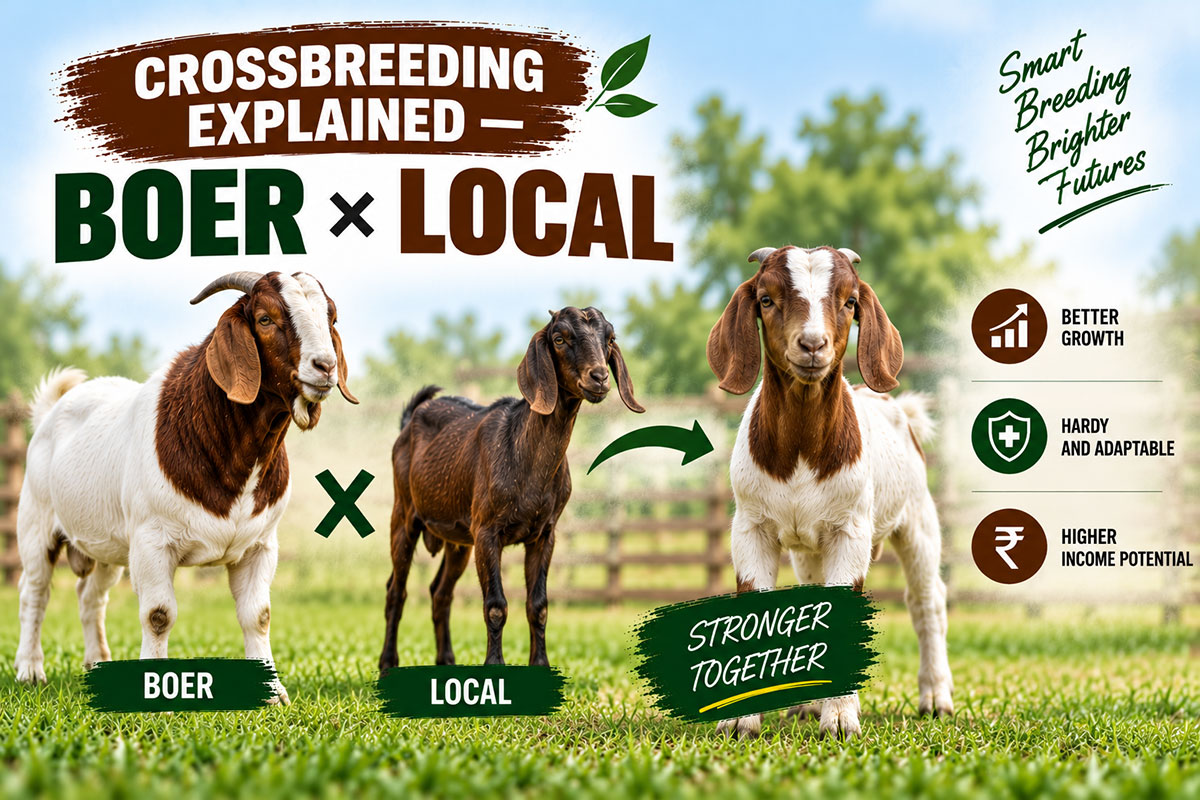
Crossbreeding — most commonly Boer bucks bred with local does — is one of the most widely used strategies among Indian commercial goat farmers looking to combine faster growth with regional hardiness. Here’s how it works and what it actually delivers.

Why Crossbreed Instead of Choosing One Pure Breed

Pure Boer offers excellent growth and meat yield but can need more intensive management in challenging climates. Pure local breeds (like Sirohi or Osmanabadi) offer strong hardiness but generally grow more slowly. Crossbreeding aims to capture a meaningful share of Boer’s growth advantage while retaining much of the local breed’s climate resilience and disease resistance — a practical middle path for many commercial operations.

How the Crossbreeding Process Works

Typically, a Boer buck is bred with local does, producing first-generation (F1) crossbred kids that show a blend of both parent breeds’ traits. Some farms continue crossbreeding across generations to fine-tune the balance between growth performance and hardiness, while others stabilise at F1 for a predictable, consistent result.
What to Expect From Boer-Cross Kids
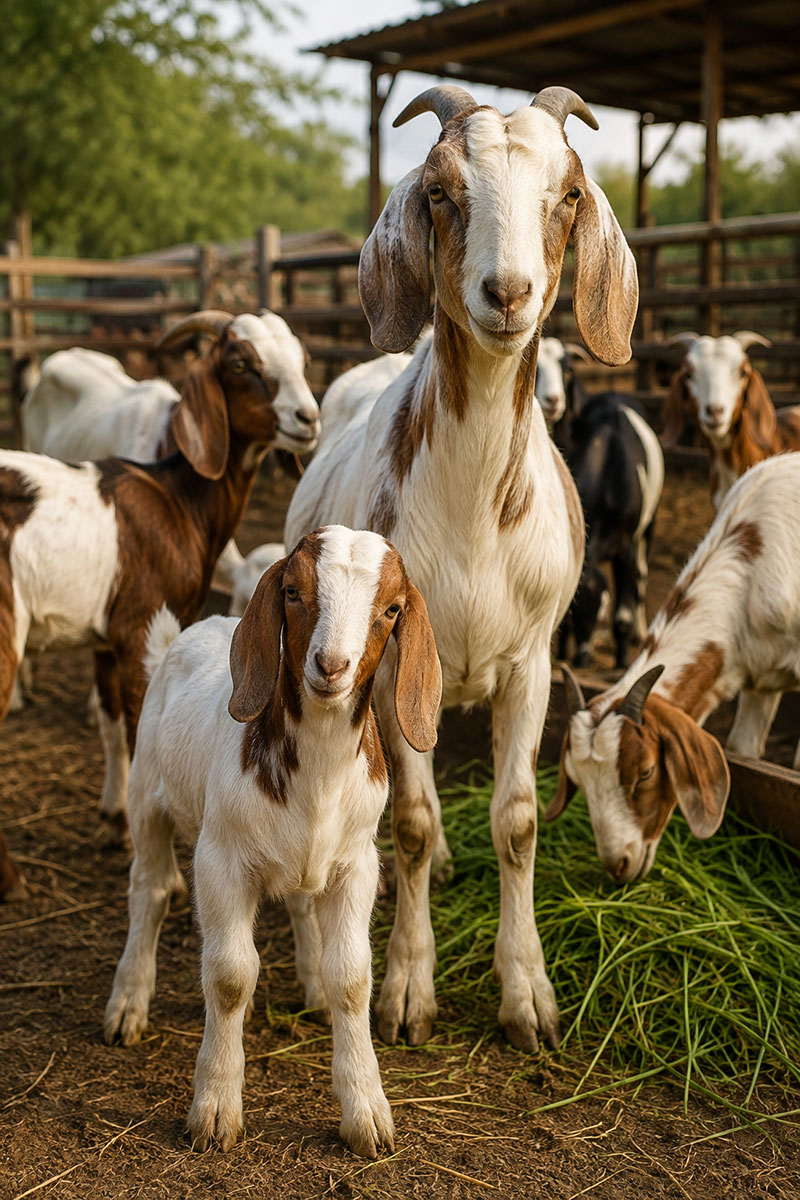
  • Growth rate: Generally faster than pure local breeds, though usually somewhat behind pure Boer under ideal conditions.
  • Hardiness: Meaningfully better climate and disease tolerance than pure Boer, closer to the local parent breed.
  • Feed needs: Moderate — typically less demanding than pure Boer, more demanding than pure hardy local breeds.
  • Market value: Often sells at a premium over pure local breeds due to better size and growth, while costing less to acquire and maintain than pure Boer.
Practical Considerations
  • Source your Boer buck from a reputable breeder to ensure genuine genetic quality — a poor-quality Boer buck undermines the entire strategy.
  • Keep basic records of parentage where possible, especially if you plan to continue crossbreeding across generations.
  • Crossbred herds still need standard vaccination, deworming, and shed hygiene — crossbreeding improves the odds, it doesn’t remove the need for good management.
Is Crossbreeding Right for Your Farm?

Boer crossbreeding is worth considering for farmers who already have an established local-breed herd and want to improve growth and market value without the higher cost and management intensity of switching entirely to pure Boer.

Key Takeaways
  • Boer x local crossbreeding balances faster growth with better regional hardiness.
  • F1 crosses offer a predictable middle ground between pure Boer and pure local breeds.
  • Source a genuinely good-quality Boer buck — the strategy depends on it.
  • A practical upgrade path for farmers with an existing local-breed herd.

+911142908809 | 9911013303

goatgyan@gmail.com

A92 C/2, 4th Floor, Nambardar Estate, Taimoor Nagar, New Friends Colony, New Delhi, Delhi 110025