
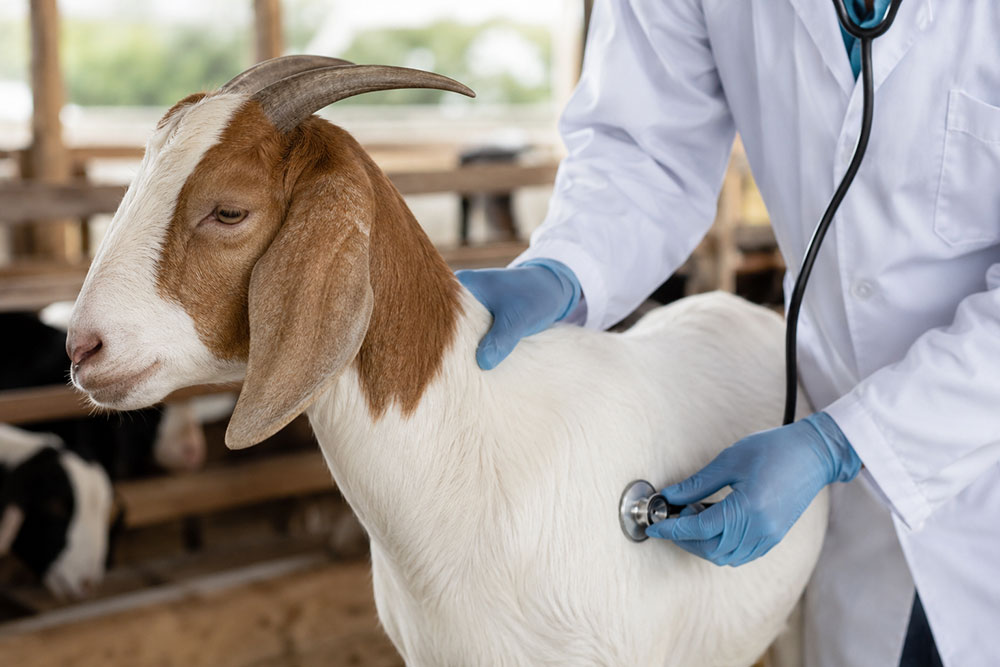
Goats mask illness well. By the time a sign is obvious to the eye, the underlying problem is often already several days in. This checklist trains you to catch the earlier, subtler signals — the ones that make the difference between a quick recovery and a serious loss.
The 10 Warning Signs
- Isolating from the herd or lying down away from the group.
- Not chewing cud for more than a few hours during the day.
- Grinding teeth — a classic pain signal in goats.
- Discharge from the eyes, nose, or mouth.
- Laboured or rapid breathing, or a persistent cough.
- Visibly pale gums or inner eyelids.
- Swelling under the jaw (‘bottle jaw’) — often a sign of severe parasite load.
- Sudden drop in milk yield in a lactating doe.
- Diarrhoea, especially if watery, dark, or blood-streaked.
- Reluctance to stand, or an arched, tucked-up posture.
Why Catching These Early Matters
Each of these signs, on its own, might be minor. Two or more together — especially isolation combined with reduced cud-chewing, or bottle jaw with pale gums — is the pattern that separates a routine check-up from an emergency. Waiting a full day ‘to see if it improves’ is the single most common reason a treatable condition becomes a fatal one.
What To Do the Moment You Spot a Sign
- Separate the animal from the herd to prevent possible disease spread and reduce its stress.
- Take its temperature and record it with the time.
- Note exactly which of the 10 signs are present — this is the information a vet or consultant needs first.
- Don’t attempt to medicate blind; an incorrect treatment can mask symptoms and delay proper diagnosis.
Keep this checklist where your herd workers can see it. The farms with the lowest disease losses aren’t the ones with the most expensive medicine cabinet — they’re the ones where every worker knows these ten signs and reports them the same day they appear.