01142908809
Request a call back

Request a call back
Request a call back
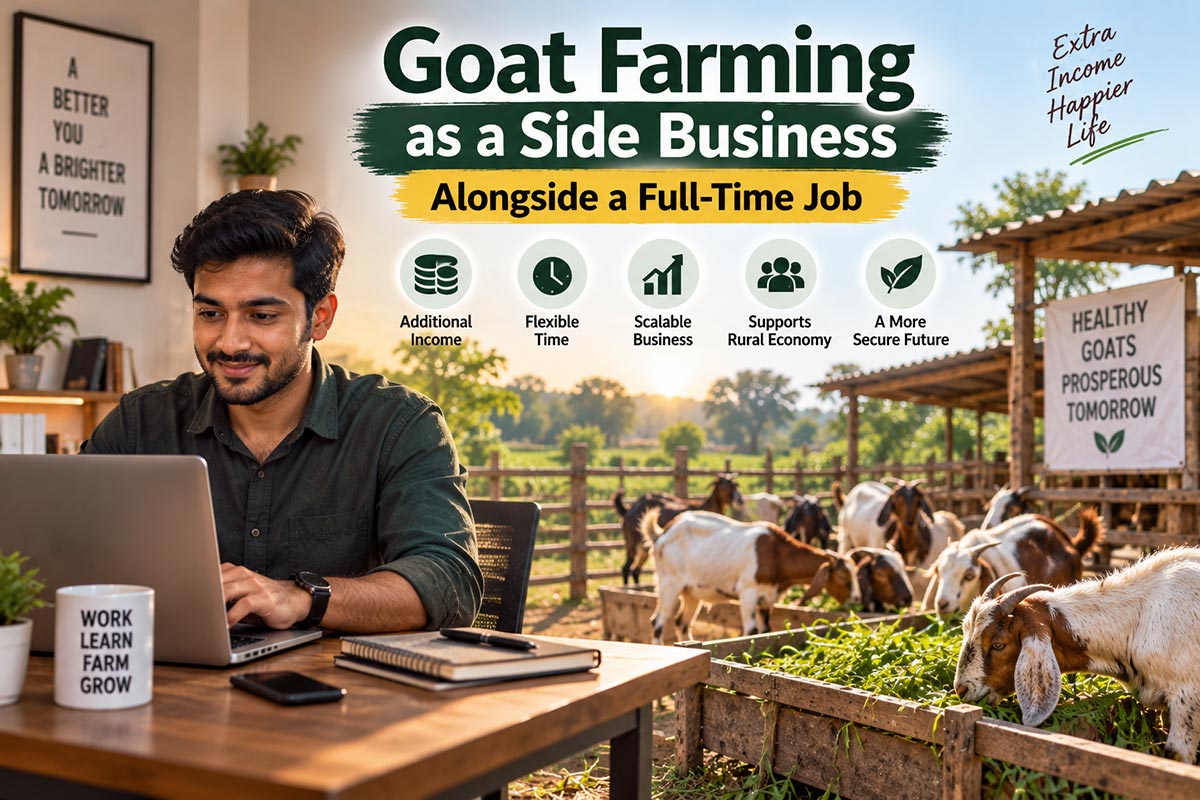
Not everyone starting a goat farm plans to leave their day job — many successful goat farmers in India run their operation as a side business, managed around existing work commitments. Here’s what makes that combination realistic, and what adjustments it typically requires.
A smaller herd — commonly in the range of 10–20 goats — is generally more manageable alongside a full-time job, since daily hands-on time requirements stay lower. Scaling beyond this level usually requires either hired labour or a shift toward full-time farm involvement.
Even a modest side-business farm benefits from part-time or family labour for daily feeding, cleaning, and monitoring — trying to handle everything personally around a full-time job schedule often leads to inconsistent care, which shows up in growth rates and health outcomes over time.
A stall-fed or semi-intensive system with a predictable daily routine (morning and evening feeding, for example) tends to fit better around a job schedule than open grazing, which often requires more flexible, spread-out attention throughout the day.

Hardier, lower-maintenance breeds (Sirohi, Osmanabadi, Barbari) are often a better fit for side-business farming than breeds like Boer or Jamunapari that reward — and to some extent require — more intensive daily management to reach their full potential.
This approach works well for those with access to land (own or family-owned), some reliable help for daily tasks, and realistic expectations about the smaller scale and slower growth of a part-time operation compared to a full-time commercial farm. It’s a genuinely practical way to build farming experience and additional income without leaving your primary livelihood.