
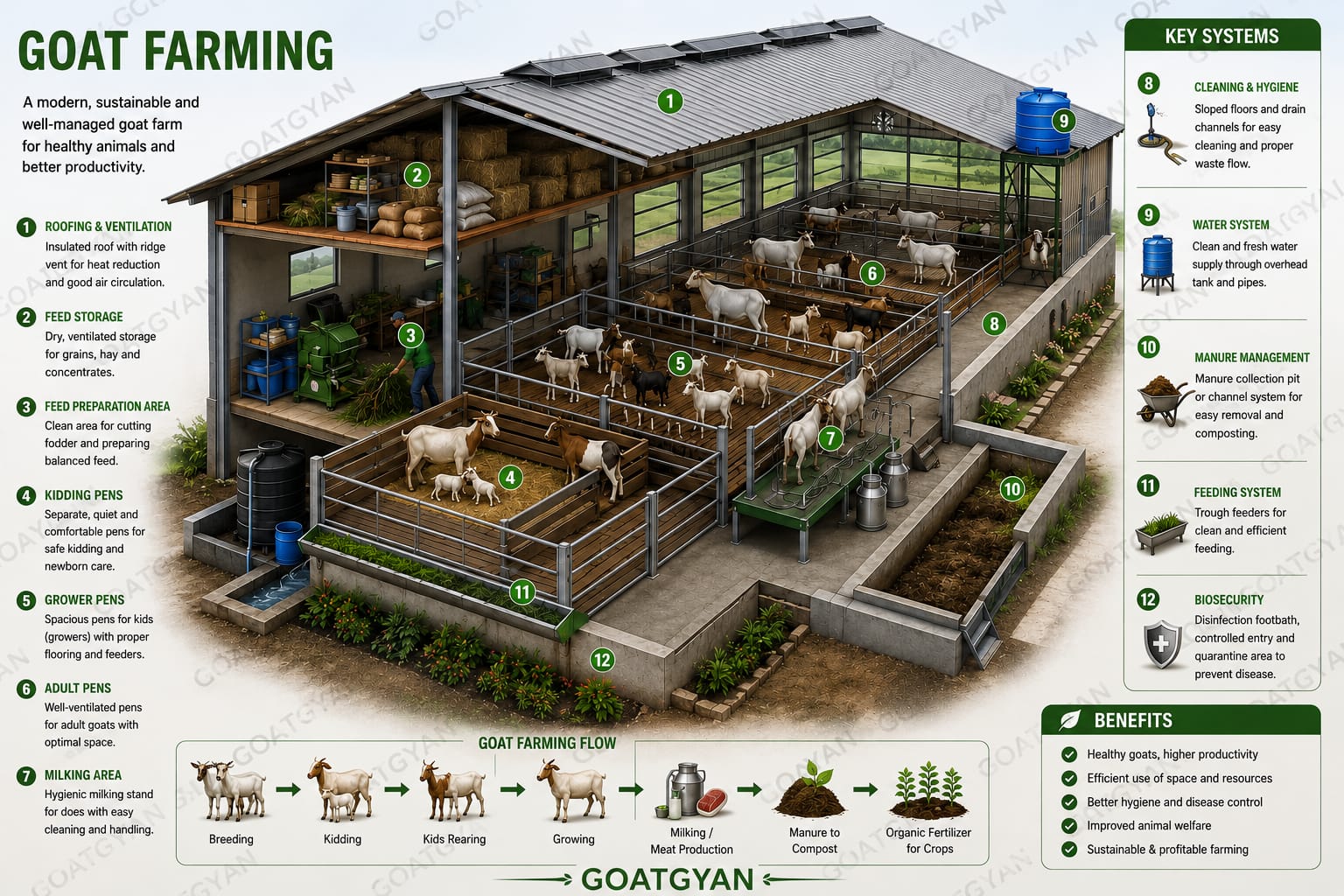
If you’re applying for a NABARD-linked subsidy or a bank loan for a goat farming unit, the single biggest reason applications get delayed or rejected isn’t the business idea — it’s an incomplete or generic project report. Banks want specific numbers tied to your location, scale, and breed choice, not a template copied off the internet.
What a Bank-Ready Project Report Actually Needs
- Unit details: herd size, breed selection, and housing specifications matched to your land and climate.
- Capital cost breakdown: shed construction, fencing, initial stock purchase, equipment.
- Recurring cost projection: feed, veterinary care, labour, on a monthly and annual basis.
- Revenue projection: kidding rate assumptions, market price per kg live weight, milk revenue if applicable.
- Break-even and repayment schedule: matched to the specific loan tenure being applied for.
- Risk and mitigation section: disease, market price fluctuation, and mortality assumptions — banks specifically look for this.
Why Generic Templates Get Rejected
A copy-pasted project report is easy for a loan officer to spot — the numbers don’t add up for your specific district’s feed and land costs, or the herd size doesn’t match your stated shed capacity. Every report should be built around your actual location, budget, and goals, not a one-size-fits-all number set.
What’s Included in a GoatGyan Project Report
Our reports are built from a proven base — refined over years of applications across Indian states — and customised to your specific district, scale, and subsidy scheme (NABARD, state animal husbandry schemes, or bank-only financing). You provide your location, target herd size, and budget; we deliver a complete, submission-ready PDF within 5 working days, plus a 15-minute clarification call.
Before You Apply: A Quick Feasibility Gut-Check
- Do you have secure land and water access for the herd size you’re planning?
- Have you identified a breed suited to your specific climate and market (meat vs. milk vs. dual-purpose)?
- Do you have a realistic buyer/market plan, not just a production plan?
If you answered yes to all three, you’re ready for a formal project report. If not, a short feasibility consultation first will save you from committing capital to a plan that needs adjusting.