01142908809
Request a call back

Request a call back
Request a call back
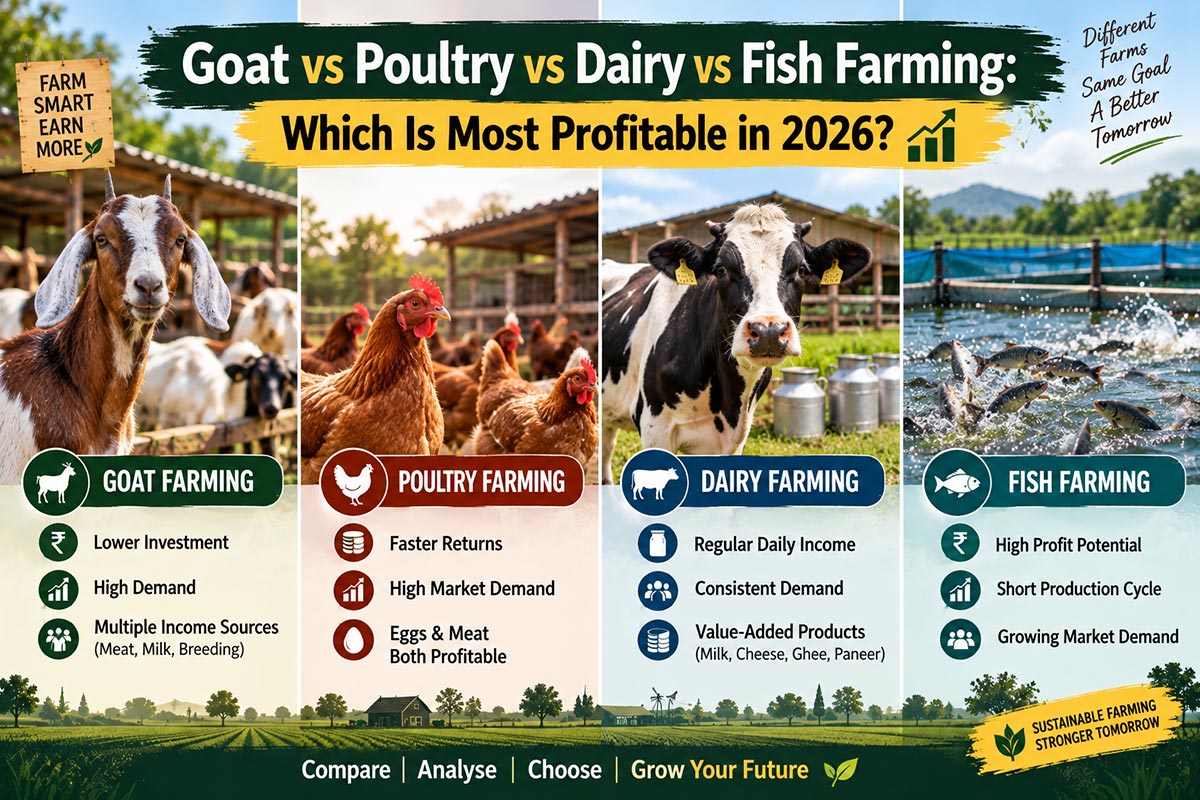
For someone deciding where to invest in agri-business, goat farming is just one of several common options — alongside poultry, dairy, and fish farming. Each has a genuinely different risk, investment, and return profile. Here’s a practical comparison to help place goat farming in context.
Poultry (broiler or layer) offers the fastest turnaround of the four — broiler cycles can complete in weeks rather than months — and relatively lower per-unit capital requirement. The trade-off is high sensitivity to disease outbreaks, which can wipe out a flock quickly, and margins that are often tightly squeezed by feed cost volatility and market price swings.
Dairy offers a genuinely continuous daily income stream and generally well-established buyer infrastructure (milk cooperatives) in many regions. It requires the highest capital investment among these four options, along with significant daily labour commitment for milking and feeding, and higher ongoing feed costs given cattle/buffalo’s larger size compared to goats.
Fish farming can offer strong returns where water resources and climate suit it, with a growing domestic and export market. It requires specific land/water infrastructure (ponds or tanks) that not every farmer has access to, and success depends heavily on water quality management — a specialised skill set different from livestock farming.
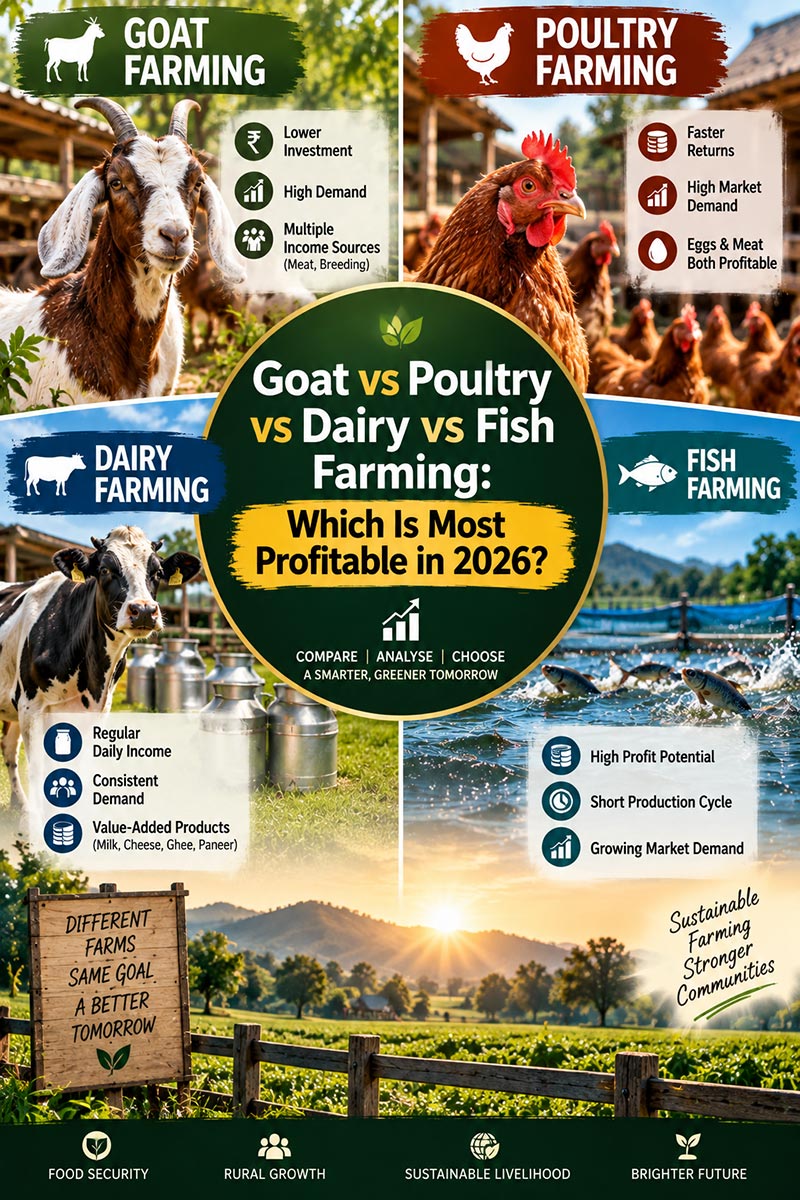
Goat farming sits in a distinctive middle ground: lower capital requirement than dairy, lower disease-outbreak risk than poultry (goats are hardier against catastrophic flock-wide loss), and a well-established domestic market through mandis across virtually every region. Sales cycles (8–12 months to sale weight) are slower than poultry but faster than reaching full dairy productivity from a new herd, and land requirements are generally more modest than dairy or fish farming.