01142908809
Request a call back

Request a call back
Request a call back
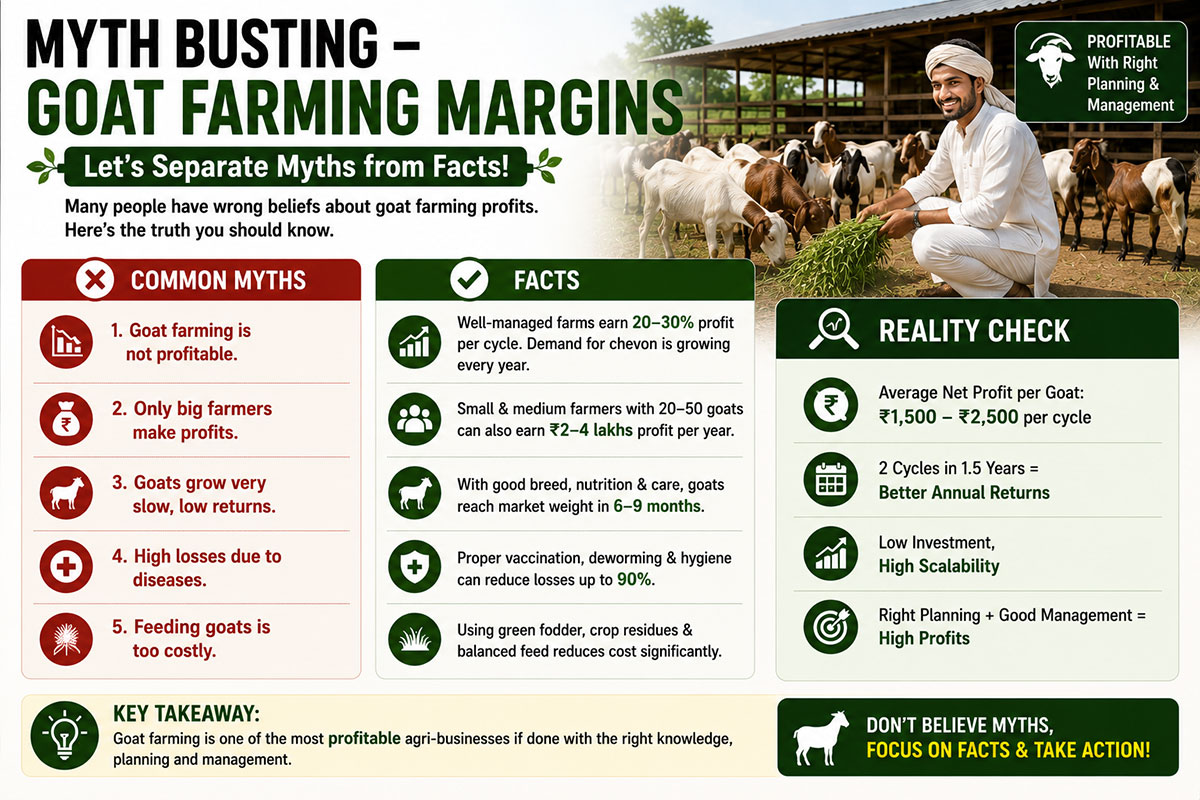
Scroll through goat farming content online and you’ll frequently see claims of 50–80% profit margins. It’s a compelling number — and it’s also, for most farms, misleading. This article breaks down where that figure comes from, why it’s often wrong in practice, and what a more realistic margin picture looks like.
This figure typically comes from comparing raw feed cost to final sale price on a single animal, in isolation — ignoring shed depreciation, labour, medicine, mortality losses, and the opportunity cost of capital tied up in the herd for months. Looked at that narrowly, margins can indeed look dramatic. Looked at as a full business, they rarely hold up.
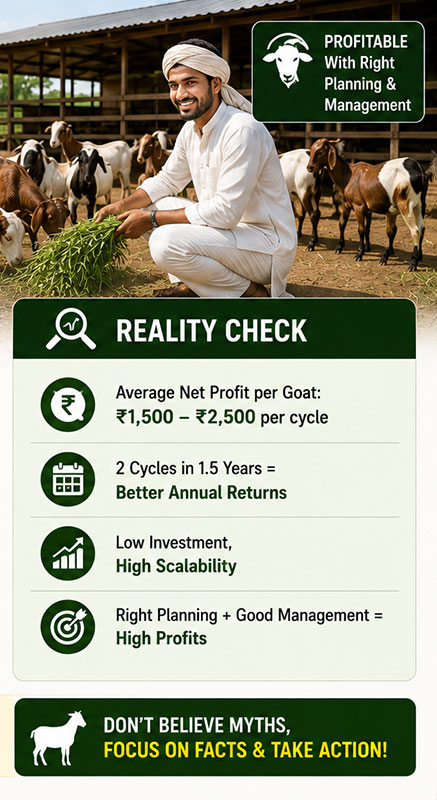
Well-run farms that account for all costs — including labour, mortality, and depreciation — commonly report net margins meaningfully lower than the viral figures, though still attractive compared to many alternative agricultural enterprises, especially once a farm is past its first 1–2 years and operating efficiently. The businesses that do well tend to reach solid profitability through consistent execution and cost control over multiple cycles, not through one spectacular batch.
Believing an inflated margin figure leads to over-optimistic financial planning — under-budgeting working capital, over-borrowing, or scaling too fast before the business model is proven on your own land. Planning around a more conservative, fully-loaded margin estimate protects you from this common trap.