01142908809

Request a call back

Write us
goatgyan@gmail.com

A92 C/2, Nambardar Estate,
New Friends Colony, New Delhi,110025

01142908809

Request a call back

Write us
info@goatgyan.com

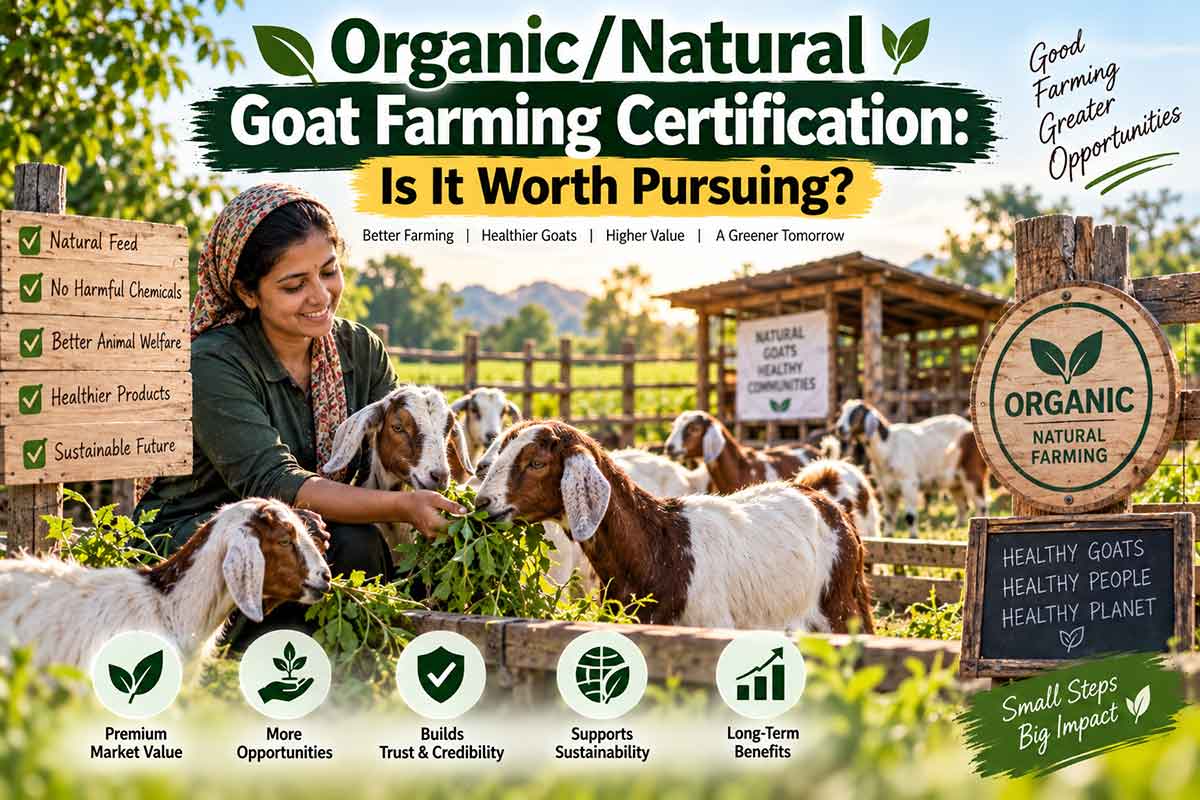
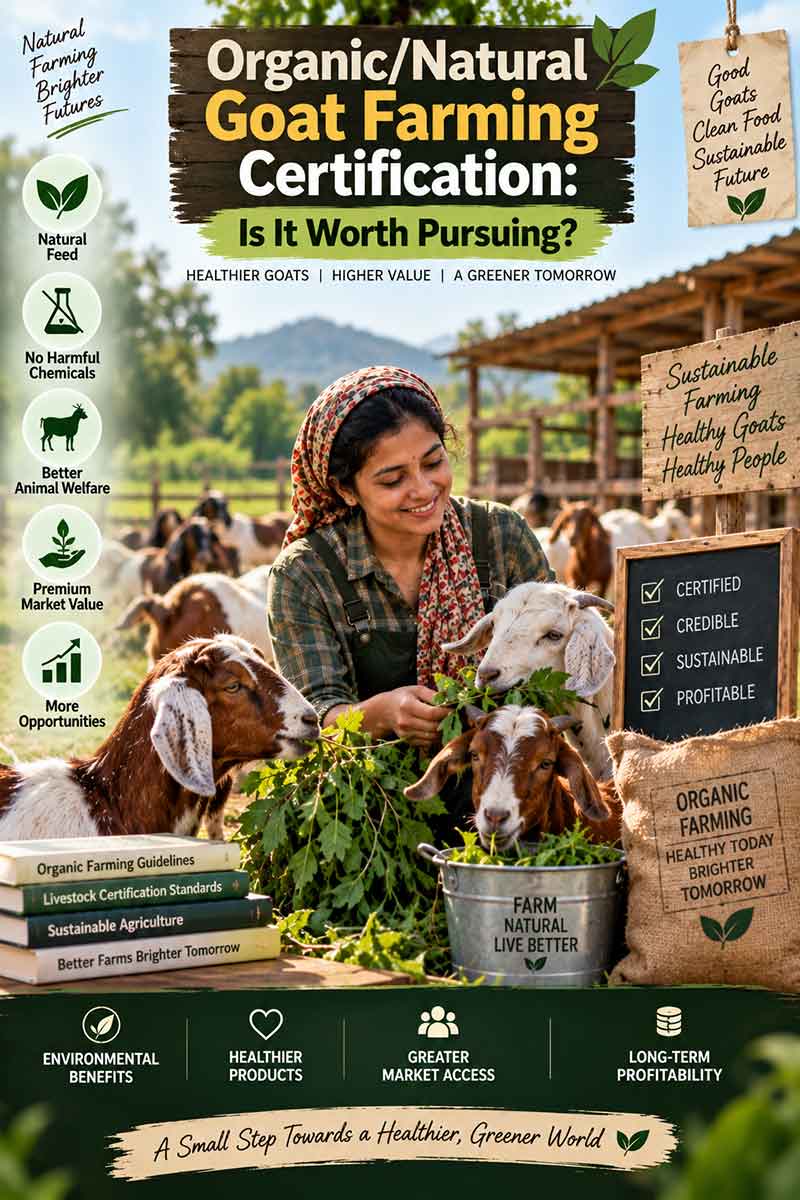
Organic/Natural Goat Farming Certification: Is It Worth Pursuing?

Introduction

As consumer interest in organic and naturally raised meat grows in India’s urban markets, some goat farmers are exploring organic certification as a way to access premium pricing. This article looks honestly at what’s involved, and when it genuinely makes sense.

What Organic Certification Typically Requires

Organic livestock certification generally requires feed sourced without synthetic pesticides or fertilisers, restrictions on synthetic veterinary treatments (with specific allowed exceptions for animal welfare), documented traceability from birth to sale, and a formal certification audit process through an accredited certifying body. This is a meaningfully higher documentation and management burden than conventional farming.

The Potential Upside

Certified organic or credibly “natural” meat can command a real price premium in urban and premium retail markets, where a growing segment of consumers is specifically seeking it out and willing to pay more. For farms with direct access to these buyers — through urban retail partnerships or direct-to-consumer sale — this premium can meaningfully improve margins.
The Real Costs and Challenges
  • Certification cost and ongoing audit fees — a real, recurring expense that needs to be weighed against the premium achievable.
  • Feed sourcing constraints — organic-compliant feed can be harder to source and often costs more.
  • Limited buyer access — the premium is only realised if you can actually reach buyers willing to pay for certified organic product; without that access, the extra cost and effort doesn’t pay off.
  • Documentation burden — consistent record-keeping across the entire farm, not just marketing claims, is required to maintain certification.
When Organic Certification Makes Sense
  • You have or can build direct access to urban/premium buyers actively seeking certified product.
  • Your farm is already relatively close to organic-compliant practices, minimising the transition cost.
  • You’re prepared for the ongoing documentation and audit requirements, not just the initial certification.
When It Probably Doesn’t Make Sense (Yet)
  • Your primary sales channel is the local mandi, where certification premiums are rarely captured.
  • You don’t have a clear path to reach buyers who specifically value and will pay for organic certification.
  • Your farm’s current practices would require substantial, costly changes to qualify.
Key Takeaways
  • Organic certification can command a real premium, but only where you can reach buyers who value it.
  • The documentation and audit burden is significant and ongoing, not a one-time effort.
  • Mandi-focused farms generally see limited benefit from certification without a direct premium buyer relationship.
  • Evaluate your actual buyer access honestly before investing in the certification process.

+911142908809 | 9911013303

goatgyan@gmail.com

A92 C/2, 4th Floor, Nambardar Estate, Taimoor Nagar, New Friends Colony, New Delhi, Delhi 110025